

ADDCOMPOSITES BLOG
The Evolution of Composite Cryotanks: A Game-Changing Development in Space Technology
Introduction
In the pursuit of space exploration, every kilogram matters. As we push the boundaries of human space flight and aim for destinations beyond low Earth orbit, the need for lighter, more efficient spacecraft components becomes increasingly crucial. Among these components, cryogenic fuel tanks stand as one of the most critical yet challenging elements to optimize.
For over five decades, metal cryogenic tanks have been the workhorses of space missions, carrying the liquid hydrogen (LH2) and liquid oxygen (LOX) necessary to launch both human crews and payloads into space. However, a remarkable statistic highlights the importance of these components: approximately 70% of a launch vehicle's dry mass consists of fuel and oxidizer tanks. This single fact presents both a challenge and an opportunity for aerospace engineers and materials scientists.
Composite materials offer a potential revolution in cryotank design and performance. By transitioning from traditional metal tanks to composite structures, engineers project weight reductions of up to 30% compared to aluminum craft—a transformation that could dramatically increase payload capacity and reduce launch costs.
The Challenge of Composite Cryotanks
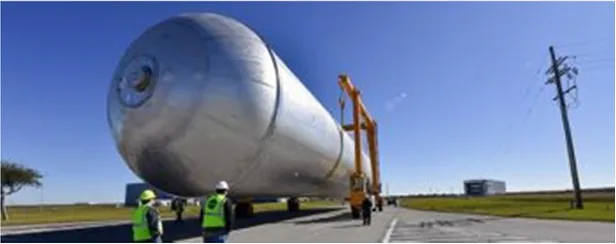
Despite their promising potential, several technical hurdles have historically prevented the widespread adoption of composite cryotanks in launch vehicles:
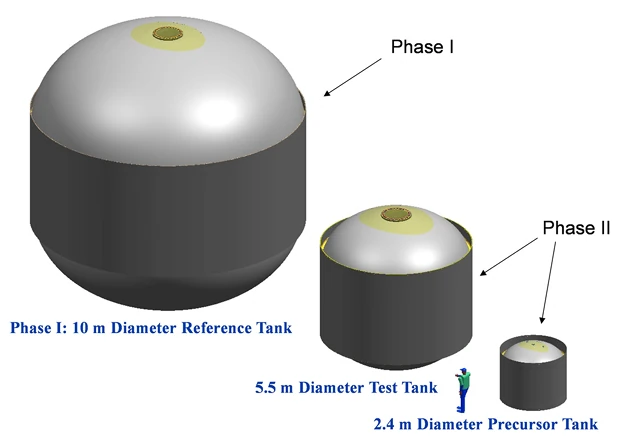
- Scale-up Challenges: Creating tanks large enough for practical use (up to 10 meters in diameter)
- Permeation Control: Managing long-duration fuel containment without leakage
- Complex Joint Loading: Ensuring structural integrity at critical connection points
- Manufacturing Complexity: Developing reliable, repeatable production processes
The NASA Composite Cryotank Technology Development (CCTD) project emerged as a concentrated effort to address these challenges. Through innovative manufacturing processes and advanced material applications, the project aimed to bridge the gap between laboratory concepts and flight-ready hardware.
The Technology Readiness Journey
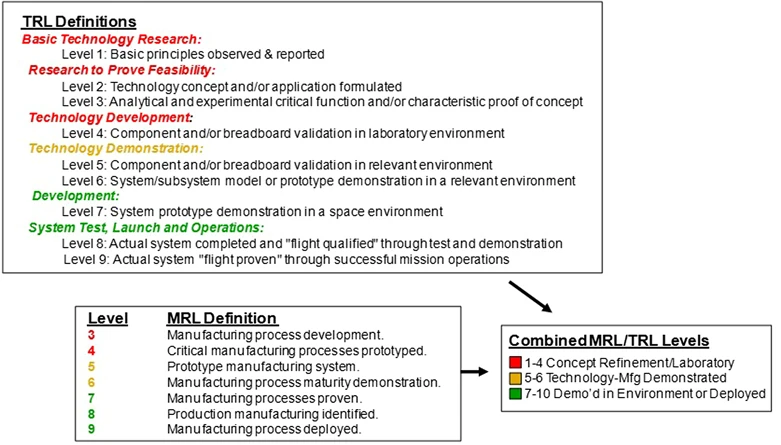
One of the most significant obstacles in implementing new aerospace technologies lies in crossing what's known as the "valley of death"—the challenging transition from early development (Technology Readiness Levels 2-3) to flight incorporation (levels 8-9). The CCTD program specifically targeted this gap, focusing on advancing composite cryotank technology to demonstration levels (5-6) through practical, full-scale testing.
The stakes are high: successful development of composite cryotanks could revolutionize not just traditional launch vehicles, but enable new possibilities in:
- Long-duration spacecraft
- In-space propulsion systems
- On-orbit propellant depots
- Future lunar landers
- Extended-range aircraft
Advanced manufacturing techniques, particularly automated fiber placement and out-of-autoclave curing, stand at the forefront of making these possibilities reality. As we'll explore in this article, the journey from concept to functional composite cryotanks represents one of the most significant advances in space technology of the past decade.
Historical Context: Three Decades of Innovation
The history of composites in cryogenic tank development spans over three decades, marked by ambitious programs, groundbreaking successes, and instructive failures. Each program contributed vital lessons that would eventually shape modern composite cryotank technology.
The NASP Era: Breaking New Ground
The journey began during the Reagan administration in 1982 with the National Aerospace Plane (NASP) program, designated as the X-30. This DARPA-funded initiative aimed to create something unprecedented: a single-stage-to-orbit (SSTO) spaceplane capable of reaching Mach 25. The program's ambitious goals created an urgent need for innovative composite solutions.
McDonnell Douglas Corporation (MDC) achieved a significant milestone in 1987 by completing their first composite cryotank. Their design featured a conformal load-bearing structure—a revolutionary concept at the time. The team initially explored thermoplastic graphite-reinforced materials for their high glass transition temperature but ultimately opted for a more practical 350°F amine-curing toughened epoxy system. This project marked the first successful low-temperature liquid hydrogen testing of a large composite cryotank.
DC-X: From Concept to Flight
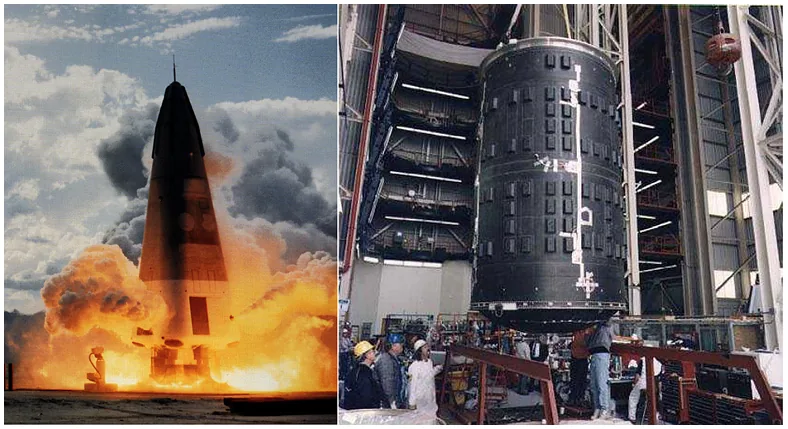
The early 1990s saw the Department of Defense's Strategic Defense Initiative Organization (SDIO) launch the DC-X program. This initiative aimed to create a rapidly reusable vertical takeoff and landing (VTOL) vehicle. The program evolved into NASA's DC-XA, which made history by incorporating the first composite cryotank ever used on a flight vehicle. The 2.4-meter diameter tank featured:
- Carbon/epoxy construction
- Two-half design with bonded belly-band joint
- Internal insulation system
- Successful completion of four flights
This achievement demonstrated that composite manufacturing techniques could produce flight-worthy cryogenic fuel containers.
The X-33 Program: Learning from Challenges
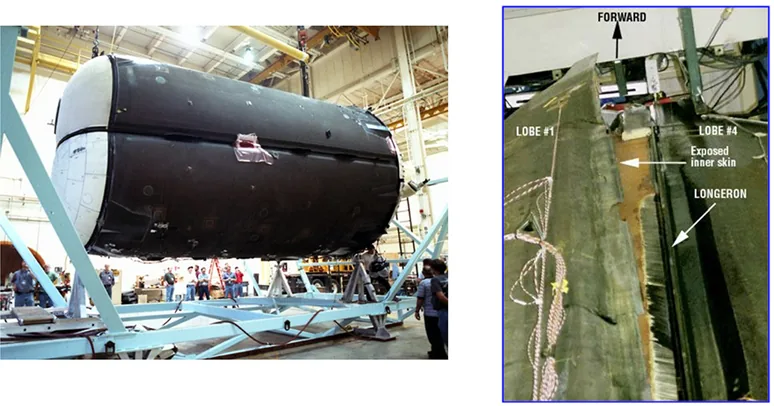
The late 1990s brought the X-33 program, part of NASA's Space Launch Initiative (SLI). Lockheed Martin's design featured a revolutionary multi-lobed honeycomb sandwich structure tank, approximately 3 meters in size. However, the program encountered significant challenges during testing:
- Delamination occurred during liquid hydrogen pressure cycling
- Micro-cracking allowed hydrogen permeation into the honeycomb structure
- Frozen air expansion during reheating led to structural failure
The X-33 experience provided crucial lessons about the importance of:
- Building block approach to manufacturing
- Proper venting in sandwich structures
- Permeation control strategies
- Comprehensive testing protocols
Transition to Modern Development
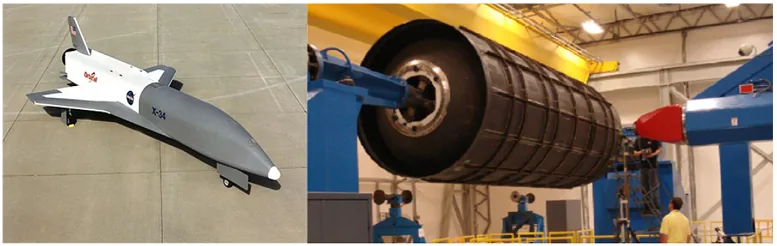
While these early programs encountered challenges, they laid essential groundwork for future developments. Key learnings included:
- The need for systematic technology maturation
- The importance of reliable inspection methods
- The critical role of proper design principles
- The value of incremental testing and validation
These historical programs highlighted both the immense potential and significant challenges of composite cryotanks. Each setback and success contributed to our understanding of how to effectively design, manufacture, and implement these critical components. As we moved into the modern era of composite cryotank development, these lessons would prove invaluable in shaping new approaches and technologies.
The CCTD Program: Bridging Theory and Practice
The Composite Cryotank Technology Development (CCTD) program represented a fundamental shift in approach to developing aerospace technology. Unlike traditional government-funded research that focused primarily on advancing basic knowledge, CCTD aimed to bridge the critical gap between laboratory concepts and flight-ready systems through large-scale experimentation and ground-based testing.
Program Objectives and Scope
The CCTD program set ambitious yet precise targets:
- 25-30% weight reduction compared to state-of-the-art aluminum-lithium tanks
- 20-25% cost reduction in manufacturing
- Advancement of Technology Readiness Levels (TRL) from 2-3 to 5-6
- Manufacturing Readiness Level (MRL) enhancement to support future production
To achieve these goals, the program focused on developing automated composite manufacturing processes that could scale to full production.
Strategic Development Approach
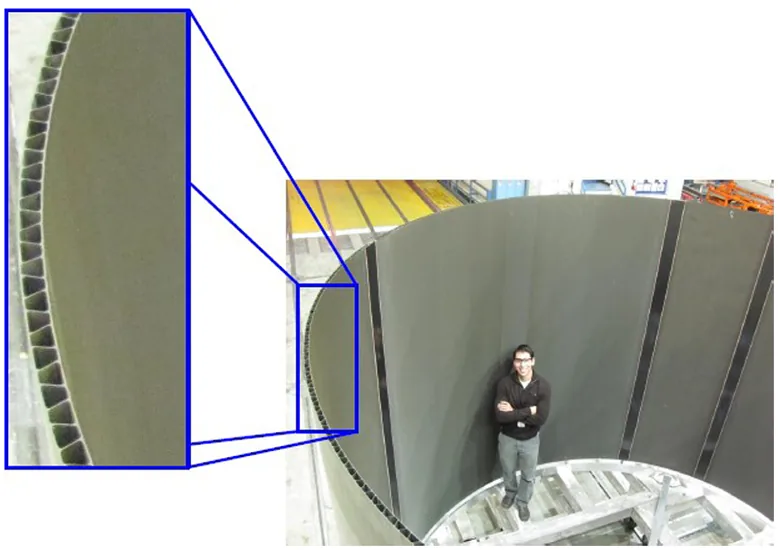
The program adopted a two-phase strategy:
Phase 1: Design and Analysis
- Material equivalency testing
- Preliminary tank designs
- Manufacturing plan development
- Risk identification in areas including:
- Performance
- Cost
- Schedule
- Manufacturing
- Inspection
Phase 2: Implementation
- Building two demonstration units:
- 2.4-meter precursor tank
- 5.5-meter full-scale tank
- Design optimization for manufacturing
- Integration of advanced materials and processes
Innovative Technical Solutions
The program introduced several groundbreaking technical solutions:
- Materials Technology
- Out-of-autoclave (OoA) curing prepreg carbon/epoxy materials
- Thin micro-crack resistant plies for permeation control
- Advanced slit-tape tow (STT) for precise placement
- Manufacturing Processes
- Robotic Automated Fiber Placement (RAFP)
- Multi-piece breakdown tooling
- Co-bonded construction techniques
- Design Features
- One-piece wall construction eliminating belly-band joints
- 3D reinforced y-joint material for stress management
- Fluted core skirts for axial load handling
- Structural health monitoring system integration
Industry Collaboration
The program brought together key industry players:
- Boeing (lead contractor)
- Janicki Industries (tooling)
- Cytec Industries (composite materials)
- Southern Research Institute (permeation testing)
- NASA Marshall Space Flight Center (testing facilities)
Technology Validation Process
The program implemented a comprehensive validation strategy:
- Building Block Approach
- Material selection
- Coupon testing
- Joint testing
- Manufacturing Demonstration Units (MDUs)
- Full-scale tank construction
- Quality Control
- Non-destructive testing
- Real-time structural health monitoring
- Advanced inspection techniques
- Performance Verification
- Ambient pressure testing
- Cryogenic cycling
- Combined load testing
- Permeation measurements
Risk Mitigation Strategy
The program addressed key risks through:
- Systematic technology maturation
- Extensive material testing
- Process monitoring and control
- Staged manufacturing approach
- Comprehensive inspection protocols
This structured approach to development helped ensure that each technological advancement was thoroughly validated before integration into the final design. The CCTD program demonstrated that with proper planning and execution, complex composite structures could be manufactured reliably and efficiently for critical aerospace applications.
Key Design Features: Engineering Innovation in Composite Cryotanks
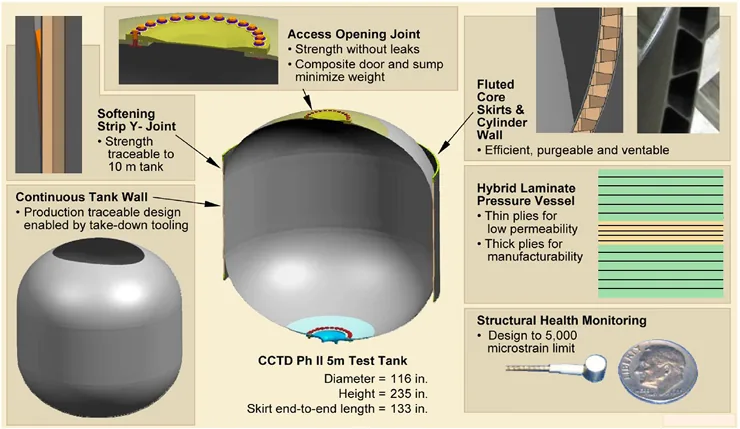
The success of the CCTD program hinged on several groundbreaking design features that addressed historical challenges in composite cryotank development. These innovations represented a significant leap forward in composite design for manufacturing, combining theoretical advances with practical solutions.
One-Piece Wall Construction
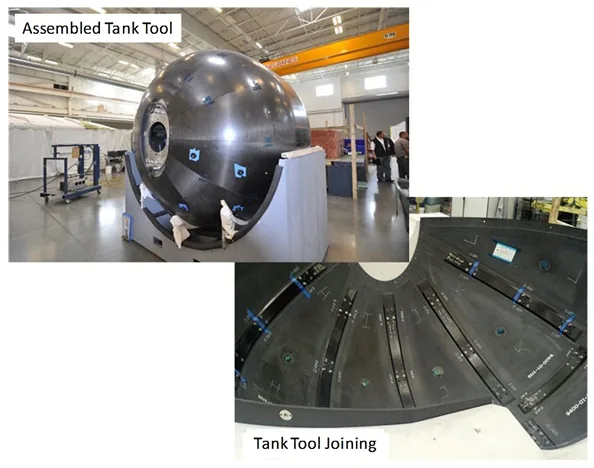
One of the most significant innovations was the elimination of the traditional belly-band joint through one-piece wall construction:
- Design Benefits
- Minimized overall weight
- Reduced potential leak paths
- Enhanced tank reliability
- Optimized structural integrity
- Manufacturing Implications
- Required development of specialized tooling
- Necessitated precise fiber placement
- Demanded innovative curing solutions
- Challenged traditional size limitations
Advanced Material Integration
The tank's wall construction featured a sophisticated hybrid laminate design:
- Laminate Architecture
- Standard thickness grade 145 material
- Thin uni-tape layers for permeation resistance
- Strategic ply orientation for load management
- Optimized fiber placement patterns
- Material Selection Criteria
- Out-of-autoclave (OoA) capability
- Micro-crack resistance
- Processing temperature compatibility
- Long-term durability
Y-Joint Innovation
The critical tank-to-skirt interface utilized a revolutionary y-joint design:
- 3D Reinforced Structure
- Softening strip implementation
- Stress concentration management
- Enhanced load transfer capability
- Thermal cycling accommodation
- Design Optimization
- Finite element analysis validation
- Strategic reinforcement placement
- Thermal stress management
- Fatigue consideration
Fluted Core Skirt Design
The implementation of fluted core skirts represented a major advancement over traditional honeycomb structures:
- Structural Advantages
- Superior axial load handling
- Enhanced damage tolerance
- Improved shear strength
- Built-in venting capability
- Manufacturing Benefits
- Simplified assembly process
- Reduced part count
- Improved inspection access
- Enhanced repairability
Integrated Health Monitoring
The design incorporated advanced monitoring systems:
- Acoustic Emission System
- Real-time impact detection
- Structural health monitoring
- Damage assessment capability
- Manufacturing quality control
- Sensor Integration
- Strain measurement
- Temperature monitoring
- Pressure tracking
- Permeation detection
Access and Maintenance Features
Practical considerations for operations were built into the design:
- Access Points
- Strategically placed openings
- Sealed door systems
- Maintenance accessibility
- Inspection ports
- Serviceability Features
- Replaceable seals
- Accessible instrumentation
- Repairable surfaces
- Maintainable joints
Manufacturing Optimization
The design incorporated features specifically for manufacturing efficiency:
- Tooling Considerations
- Multi-piece breakdown capability
- Extract-through-opening design
- Alignment features
- Assembly aids
- Process Integration
- Automated fiber placement compatibility
- Co-bonding optimization
- Quality control access
- Assembly sequencing
Performance Enhancement Features
Several design elements focused on maximizing performance:
- Thermal Management
- Controlled thermal gradients
- Cryogenic optimization
- Insulation integration
- Thermal cycling accommodation
- Structural Efficiency
- Weight optimization
- Load path management
- Stress distribution
- Fatigue resistance
These design features worked in concert to create a composite cryotank that not only met but exceeded the program's ambitious goals for weight reduction and performance improvement. The success of these innovations has laid the groundwork for future developments in composite pressure vessel technology.
Manufacturing Process: From Concept to Reality
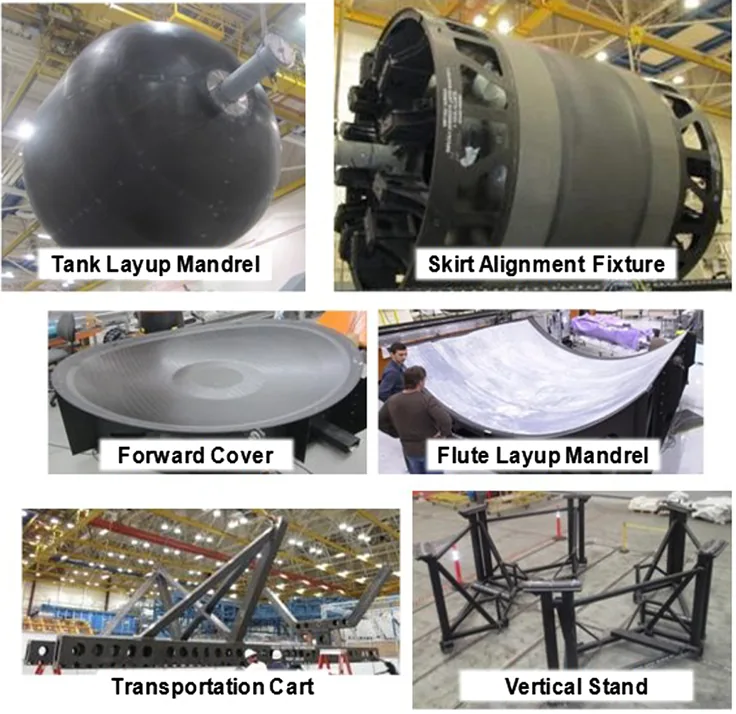
The manufacturing phase of the CCTD program represented a crucial step in proving that advanced composite manufacturing could move beyond theory to practical implementation. The process combined cutting-edge automation with precise quality control at Boeing's Advanced Development Center (ADC).
Facility and Equipment Setup
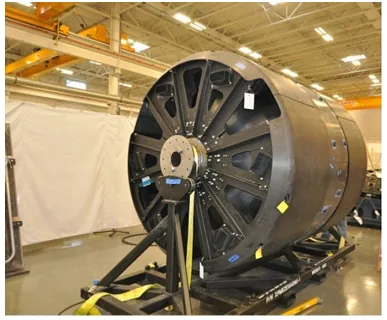
The manufacturing infrastructure required several specialized components:
- Advanced Development Center Capabilities
- Material handling systems
- Clean room environments
- Automated placement equipment
- Quality control systems
- Environmental control
- Specialized Equipment
- Robotic Automated Fiber Placement (RAFP) systems
- Multipiece breakdown tooling
- Overhead moving equipment (OHME)
- Automated ultrasonic scanning systems
Building Block Approach
The manufacturing process followed a systematic progression:
- Process Development
- Material selection validation
- Coupon and joint testing
- Manufacturing Demonstration Units (MDUs)
- Tooling verification
- Scale-Up Activities
- 2.4m precursor tank
- Process refinement
- Quality verification
- 5.5m full-scale implementation
Manufacturing Flow Implementation
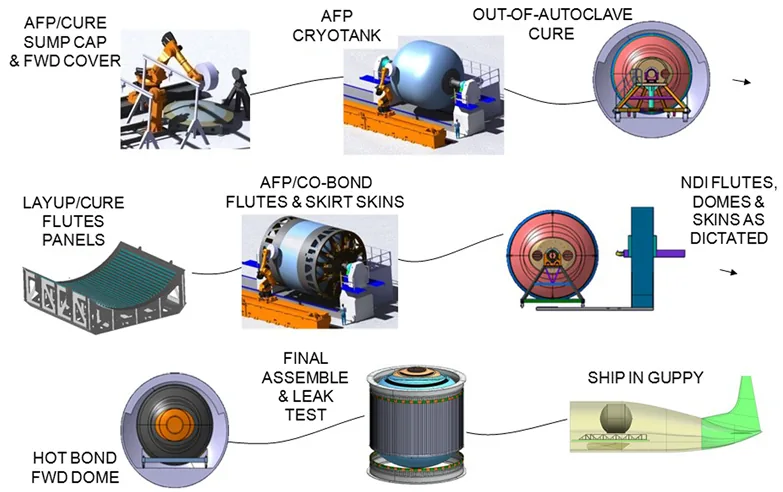
The production process involved several key stages:
- Component Preparation
- Automated fiber placement of tank shells
- Fluted core panel fabrication
- Cover and door manufacturing
- Tooling assembly and verification
- Assembly Sequence
- Tank shell layup and cure
- Skirt integration
- Cover installation
- Final assembly
Innovative Manufacturing Solutions
Several breakthrough manufacturing techniques were employed:
- Robotic AFP Implementation
- Custom head development for 0.64cm slit-tape tow
- Programmable fiber placement
- Precise control systems
- Quality monitoring during placement
- Tooling Innovation
- Multipiece breakdown design
- Extraction capability through openings
- Alignment and assembly features
- Temperature and pressure control
Quality Control Integration
Comprehensive quality measures were implemented throughout:
- In-Process Inspection
- Real-time monitoring
- Automated defect detection
- Process parameter verification
- Material tracking
- Post-Process Verification
- Ultrasonic inspection
- Dimensional verification
- Structural health monitoring
- Leak testing
Material Management
Careful attention was paid to material handling and processing:
- Out-of-Autoclave Processing
- Temperature control
- Cure cycle optimization
- Vacuum integrity
- Quality verification
- Material Storage and Preparation
- Environmental control
- Out-time management
- Material tracking
- Process documentation
Assembly Integration
Final assembly required precise coordination:
- Component Integration
- Skirt attachment
- Cover installation
- Structural bonding
- System integration
- Final Processing
- Leak checking
- System verification
- Instrumentation installation
- Preparation for testing
Manufacturing Challenges and Solutions
Key challenges were addressed through innovative solutions:
- Technical Challenges
- Out-time constraints
- Complex geometry manufacturing
- Quality assurance
- Process control
- Solutions Implemented
- Process optimization
- Tooling innovation
- Quality control integration
- Manufacturing flow refinement
The manufacturing process demonstrated that complex composite structures could be produced reliably and efficiently, setting new standards for aerospace manufacturing. The success of these manufacturing methods has established a foundation for future composite pressure vessel production, proving that automated composite manufacturing can meet the demanding requirements of space applications.
Testing and Validation: Proving Performance Under Extreme Conditions
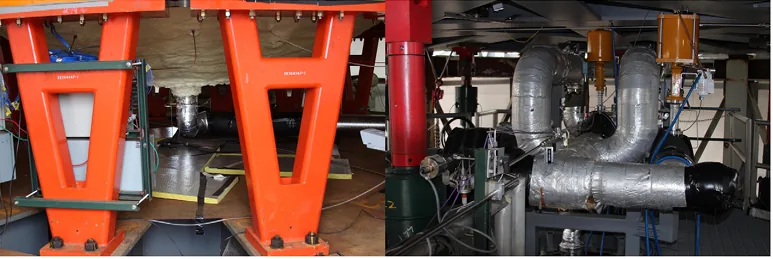
The success of the CCTD program hinged not just on innovative design and manufacturing, but on rigorous testing that validated performance under real-world conditions. This comprehensive testing program represented one of the most thorough evaluations of composite cryogenic structures ever conducted.
Test Criteria and Success Metrics
The testing program established clear criteria for success:
- Primary Success Criteria
- No catastrophic structural failure during ambient pressure tests
- No detrimental yielding or delamination below test pressure
- No local disbonding of laminates
- No bonded joint failures
- Structural integrity maintenance
- Performance Goals
- Correlation between test data and FEM predictions
- Achievement of target weight reduction
- Verification of permeation limits
- Demonstration of thermal cycling capability
Comprehensive Testing Program
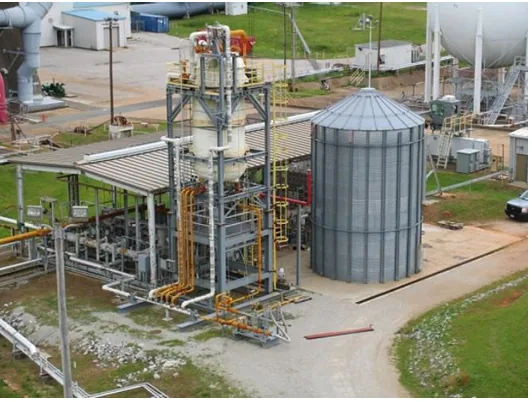
Testing proceeded through multiple phases:
- Material Level Testing
- Basic composite materials
- Adhesives
- Laminate properties
- Impact-damaged specimens
- Joint configurations
- Environmental Testing
- Ambient conditions
- Cryogenic temperatures
- Thermal cycling
- Combined thermal-mechanical loading
Test Facility Implementation
Testing was conducted at NASA's Marshall Space Flight Center, utilizing:
- Test Cell Infrastructure
- Cryogenic handling systems
- Pressure control equipment
- Data acquisition systems
- Safety monitoring
- Specialized Equipment
- Load application fixtures
- Thermal control systems
- Instrumentation interfaces
- Health monitoring systems
Testing Sequence
The testing followed a methodical progression:
- 2.4m Precursor Tank
- Ambient pressure testing
- Cryogenic pressure testing
- Design life cycle testing
- Performance validation
- 5.5m Full-Scale Tank
- Ambient pressure verification
- LH2 cryogenic testing
- Combined load testing
- Permeation measurement
Instrumentation and Monitoring
Comprehensive monitoring systems were employed:
- Real-Time Data Collection
- Strain measurements
- Temperature tracking
- Acoustic emission monitoring
- Pressure sensing
- Structural Health Monitoring
- Impact detection
- Damage assessment
- Deformation tracking
- Leak detection
Critical Test Results
Key findings demonstrated success in multiple areas:
- Structural Performance
- Successful pressure containment
- Structural integrity maintenance
- Load-bearing capability
- Joint effectiveness
- Thermal Performance
- Successful cryogenic operation
- Thermal cycling endurance
- Temperature gradient management
- Insulation effectiveness
Permeation Testing
Specialized testing verified hydrogen containment:
- Measurement Methods
- In-situ permeation monitoring
- Gas chromatograph analysis
- Barrier effectiveness validation
- Long-term performance assessment
- Results Analysis
- Permeation rate verification
- System optimization
- Performance prediction
- Design validation
Life Cycle Testing
Durability was verified through extensive cycling:
- Pressure Cycling
- Multiple pressure levels
- Rapid pressurization
- Extended hold periods
- Depressurization effects
- Thermal Cycling
- Fill and drain operations
- Temperature transitions
- Hold time verification
- System response analysis
Test Program Achievements
The testing program validated several critical aspects:
- Technical Validation
- Weight reduction goals met
- Performance requirements achieved
- Manufacturing process verification
- Design approach confirmation
- Operational Verification
- System functionality
- Maintenance procedures
- Safety protocols
- Operational limits
The comprehensive testing program not only validated the performance of the composite cryotanks but also established new standards for testing and certification of large-scale composite structures for space applications. The successful completion of these tests marked a significant milestone in the advancement of composite technology for aerospace applications.
Results and Achievements: Setting New Standards in Aerospace Manufacturing
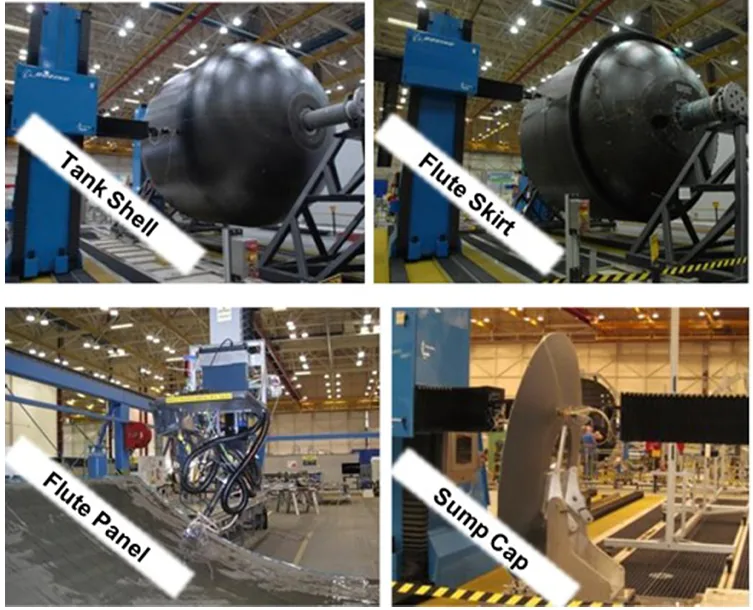
The CCTD program achieved remarkable success in advancing composite cryotank technology, demonstrating innovations in composite materials that have significant implications for future aerospace applications. The program's achievements extended beyond mere technical success to establish new paradigms in aerospace manufacturing.
Technical Achievements
The program met or exceeded its primary objectives:
- Weight Reduction
- Achieved 33% weight savings compared to aluminum-lithium tanks
- Surpassed original 25-30% target
- Maintained structural integrity
- Optimized design efficiency
- Performance Validation
- Successfully demonstrated cryogenic operation
- Verified permeation control
- Established thermal cycling capability
- Proved structural durability
Manufacturing Advancements
Significant progress was made in manufacturing capabilities:
- Process Innovation
- Successful implementation of automated fiber placement
- Development of multi-piece breakdown tooling
- Establishment of out-of-autoclave processing
- Integration of quality control systems
- Scalability Demonstration
- Successful scale-up from 2.4m to 5.5m tanks
- Validated manufacturing processes
- Established production readiness
- Confirmed cost reduction potential
Technology Readiness Advancement
The program successfully bridged the development gap:
- TRL/MRL Progress
- Advanced from TRL 2-3 to 5-6
- Enhanced manufacturing readiness
- Validated system-level performance
- Established production capability
- Risk Reduction
- Identified and mitigated key risks
- Validated design approaches
- Verified manufacturing methods
- Established testing protocols
Cost Impact Analysis
The program demonstrated significant cost advantages:
- Manufacturing Cost Reduction
- Achieved 20-25% cost savings target
- Optimized production processes
- Reduced assembly requirements
- Streamlined quality control
- Lifecycle Cost Benefits
- Reduced maintenance requirements
- Improved durability
- Enhanced reliability
- Lower operational costs
Environmental Impact
The program demonstrated environmental benefits:
- Material Efficiency
- Reduced material waste
- Sustainable manufacturing processes
- Improved resource utilization
- Lower energy consumption
- Operational Benefits
- Reduced fuel requirements
- Lower emissions impact
- Improved payload efficiency
- Enhanced vehicle performance
Industry Impact
The program's success has broad implications:
- Aerospace Applications
- Upper stage fuel tanks
- Launch vehicle structures
- Space exploration vehicles
- Long-duration aircraft
- Technology Transfer
- Industrial applications
- Ground transport
- Energy storage
- Marine systems
Knowledge Development
The program generated valuable intellectual capital:
- Technical Knowledge
- Advanced design methodologies
- Improved manufacturing processes
- Enhanced testing procedures
- Refined analysis methods
- Best Practices
- Quality control procedures
- Process documentation
- Safety protocols
- Manufacturing guidelines
Future Applications
The program opened new possibilities for:
- Space Exploration
- Deep space missions
- Orbital fuel depots
- Landing systems
- In-space propulsion
- Commercial Applications
- Launch vehicles
- Satellite systems
- Aircraft structures
- Ground transport
Validation of Key Technologies
The program confirmed the viability of:
- Design Approaches
- One-piece tank construction
- Fluted core structures
- Y-joint design
- Permeation control
- Manufacturing Methods
- Automated placement
- Out-of-autoclave processing
- Co-bonding techniques
- Quality control systems
The CCTD program's achievements represent a significant leap forward in aerospace manufacturing capability, establishing new standards for composite structure production. These results not only validated the program's objectives but also opened new possibilities for future aerospace applications.
Future Implications and Conclusion: The Path Forward in Composite Technology
The successful completion of the CCTD program represents more than just a technological achievement; it marks a pivotal moment in aerospace manufacturing. The implications of this success extend far beyond the immediate accomplishments, setting the stage for a new era in space exploration and aerospace innovation.
Future Development Pathways
The program has opened several promising avenues for advancement:
- Next-Generation Launch Systems
- Integration with Space Launch System (SLS)
- Commercial launch vehicle applications
- Reusable launch system development
- Enhanced payload capacity systems
- Manufacturing Evolution
- Advanced automation integration
- Artificial intelligence in process control
- Enhanced quality assurance systems
- Scaled production capabilities
Industry Transformation
The program's success catalyzes broader industry changes:
- Manufacturing Paradigm Shift
- Transition to automated processes
- Integration of digital technologies
- Enhanced quality control systems
- Streamlined production workflows
- Supply Chain Evolution
- Material supplier development
- Equipment manufacturer innovation
- Process technology advancement
- Quality control enhancement
Technological Horizons
New possibilities emerge for future development:
- Material Advancement
- Next-generation composites
- Enhanced permeation barriers
- Improved thermal properties
- Advanced bonding systems
- Process Innovation
- Machine learning applications
- Automated defect detection
- Real-time process optimization
- Enhanced manufacturing control
Space Exploration Impact
The program's achievements enable new possibilities:
- Mission Capabilities
- Extended duration missions
- Deep space exploration
- Orbital refueling operations
- Enhanced payload capacity
- Vehicle Development
- Advanced spacecraft design
- Improved fuel efficiency
- Enhanced mission flexibility
- Reduced launch costs
Environmental Considerations
The program advances sustainability goals:
- Resource Efficiency
- Sustainable manufacturing processes
- Reduced material waste
- Improved energy efficiency
- Lower environmental impact
- Operational Benefits
- Reduced fuel consumption
- Lower emissions
- Enhanced payload efficiency
- Improved vehicle performance
Recommendations for Future Development
Key areas for continued advancement include:
- Technical Development
- Scale-up to larger structures
- Enhanced automation systems
- Improved material systems
- Advanced process control
- Infrastructure Development
- Manufacturing facility enhancement
- Testing capability expansion
- Quality control advancement
- Supply chain optimization
Conclusion
The CCTD program has demonstrated that composite cryotanks are not just feasible but represent a superior solution for next-generation space vehicles. The program's success in achieving its primary objectives—33% weight reduction and 20-25% cost savings—while advancing manufacturing readiness levels marks a significant milestone in aerospace technology.
Key takeaways include:
- Technical Achievement
- Successful validation of composite cryotank technology
- Manufacturing process verification
- Performance requirements met
- Risk reduction demonstrated
- Industry Impact
- New manufacturing standards established
- Advanced automation validated
- Cost reduction potential proven
- Supply chain development initiated
- Future Potential
- Enhanced space exploration capabilities
- Improved launch vehicle performance
- New application possibilities
- Sustainable manufacturing advancement
The CCTD program's achievements have laid a solid foundation for the future of aerospace manufacturing. As the industry moves forward, the lessons learned and technologies developed through this program will continue to influence and shape the next generation of space exploration vehicles and advanced aerospace applications.
This program demonstrates that with proper planning, innovative design, and rigorous execution, complex composite structures can be manufactured reliably and efficiently for critical aerospace applications. The future of space exploration looks brighter with these advanced materials and manufacturing processes at our disposal.
References and Further Reading
This article draws primarily from the comprehensive work:
McCarville, D. A., Guzman, J. C., Dillon, A. K., Jackson, J. R., & Birkland, J. O. (2024). "Design, Manufacture and Test of Cryotank Components." In Comprehensive Composite Materials II. DOI:10.1016/B978-0-12-803581-8.09958-6
Additional Resources:
- Fikes, J., & Vickers, J. (2011). Composite cryotank technologies and demonstration project. 62nd Joint Army-Navy-NASA-Air Force Propulsion Meeting.
- NASA Press Release. (2014). Composite Cryotank Technologies & Demonstration.
- Vickers, J. (2013). Composites Australia Conference composite cryotank projects Structures for launch vehicles.
- McCarville, D., et al. (2013). Manufacturing overview of a 2.4 m composite cryotank. SAMPE Technical Conference Proceedings.
Ready to Transform Your Composite Manufacturing?
The success of the CCTD program demonstrates the immense potential of advanced composite manufacturing in aerospace applications. At Addcomposites, we're making these cutting-edge technologies accessible to manufacturers of all sizes.
Take the Next Step:
- Explore Our Solutions
- AFP-XS System - Advanced fiber placement technology
- AddPath Software - Comprehensive path planning and simulation
- Technical Support - Expert guidance for your manufacturing needs
- Stay Informed
- Subscribe to our newsletter for the latest updates in composite manufacturing
- Follow our blog for in-depth technical articles
- Join our webinars and training sessions
- Connect With Us
- Contact our team to discuss your specific manufacturing needs
- Schedule a demonstration of our automated fiber placement technology
- Explore partnership opportunities
Let's work together to bring the next generation of composite manufacturing capabilities to your facility.
This article was crafted with technical accuracy and industry insight to provide value to manufacturers, engineers, and technology leaders in the composite manufacturing space. For more information about implementing advanced manufacturing solutions in your operations, contact Addcomposites today.