

ADDCOMPOSITES BLOG
Support for Dry Fibers in AFP Systems: Applications, Benefits, and Implementation Guide
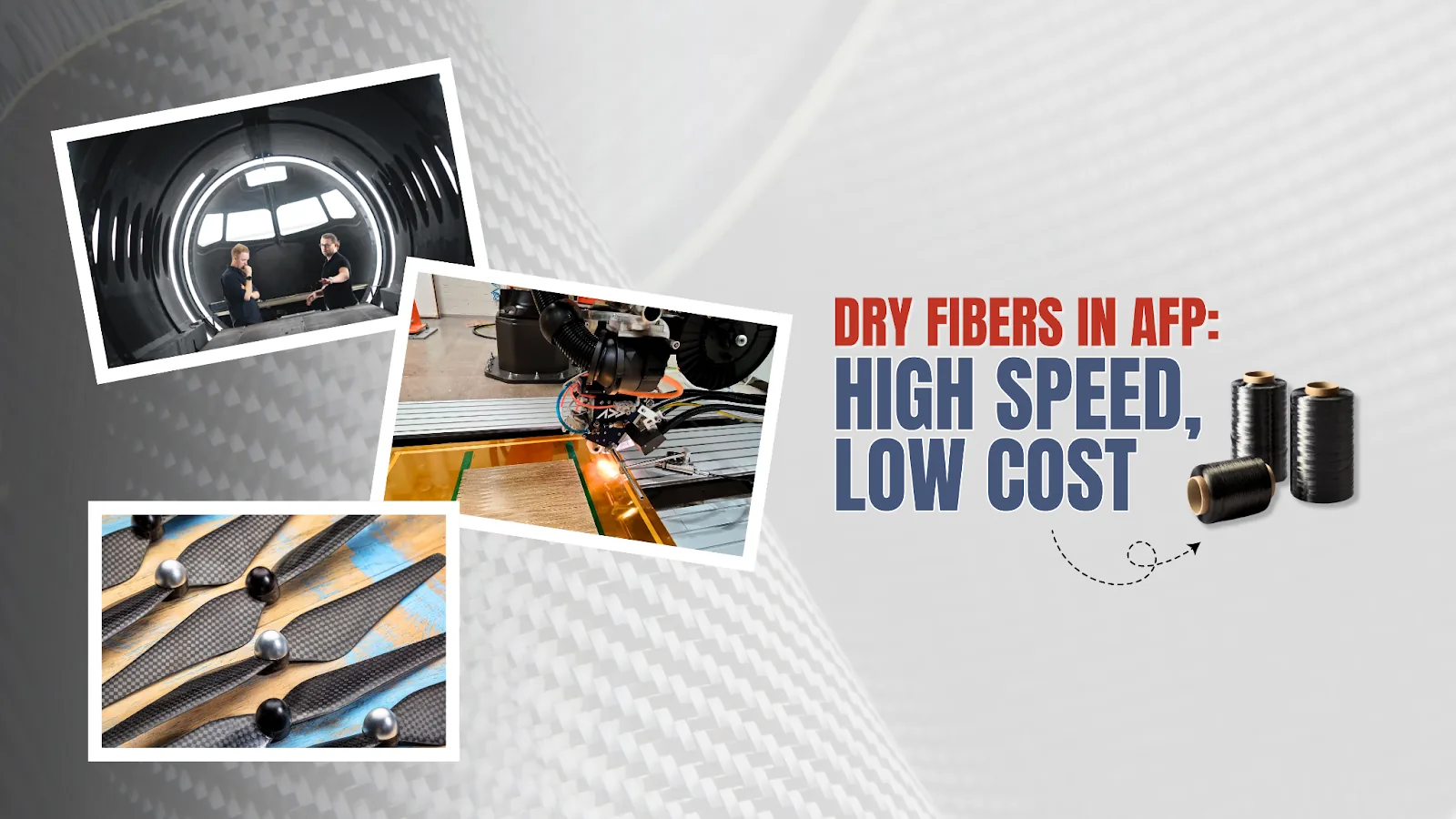
Automated Fiber Placement (AFP) technology has evolved significantly in recent years, with one of the most promising developments being the ability to process dry fibers. This advancement opens new possibilities for composite manufacturing across various industries, particularly aerospace.
Understanding Dry Fiber Processing in AFP
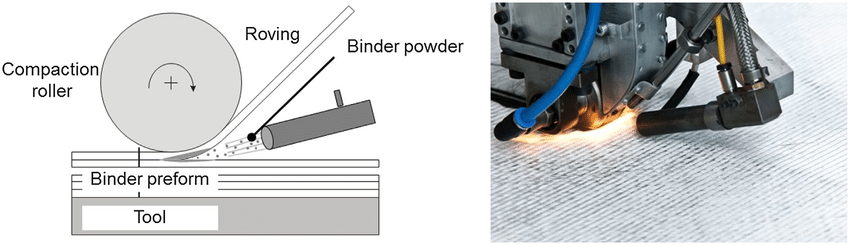
Link to source
Dry fiber placement refers to the automated deposition of non-resin-impregnated carbon fibers that are pre-coated with a binder to maintain fiber cohesion during the placement process. Unlike traditional pre-impregnated (prepreg) materials, dry fibers require subsequent infusion with resin after the layup is complete46.
The process utilizes specialized AFP equipment that places multiple narrow tows of dry fiber material directly onto mold surfaces using computer-guided systems. These systems typically incorporate:
- Specialized heating systems (often laser-based) to activate the binder
- Enhanced tow tension control mechanisms
- Modified head controls for precise fiber placement
- Specialized compaction rollers4
Wet vs. Dry Fiber Processing: Key Differences
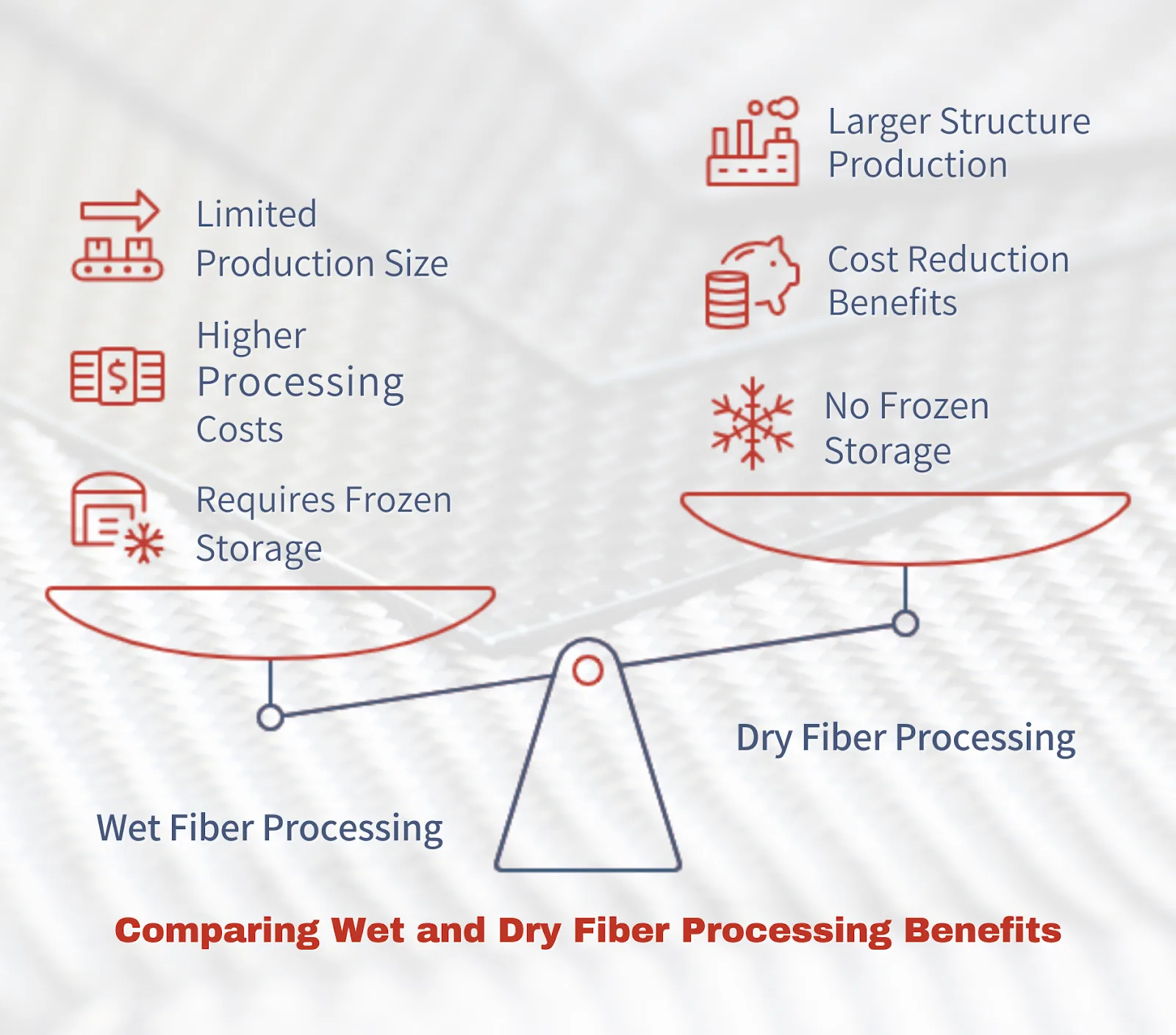
Material Characteristics
Wet Carbon Fiber:
- Traditional prepreg materials with resin already impregnated
- Requires frozen storage and has limited out-time
- Higher stiffness during placement
- Typically processed using infrared heating systems15
Dry Carbon Fiber:
- Pre-impregnated only with a binder (typically thermoplastic)
- No frozen storage required and no out-time limitations
- Less stiff during placement, requiring precise tension control
- Often processed using laser heating for precise temperature control46
Manufacturing Benefits
Dry fiber placement offers several significant advantages over traditional prepreg AFP:
- Cost Reduction: Eliminates the additional cost of prepregging, frozen storage, and often autoclave processing6
- Production of Larger Structures: No out-time limitations for complex layups allows for production of large unitized structures6
- Improved Processing Rates: Once properly configured, dry fiber can achieve higher laydown and steering speeds than traditional prepreg4
- Enhanced Reliability: The absence of resin significantly reduces build-up issues, supporting longer maintenance intervals and greater reliability4
- Improved Mechanical Properties: Early development work indicates potential improvements in mechanical properties, possibly due to the thermoplastic binder improving toughness6
Implementation Guide for Dry Fiber AFP Systems
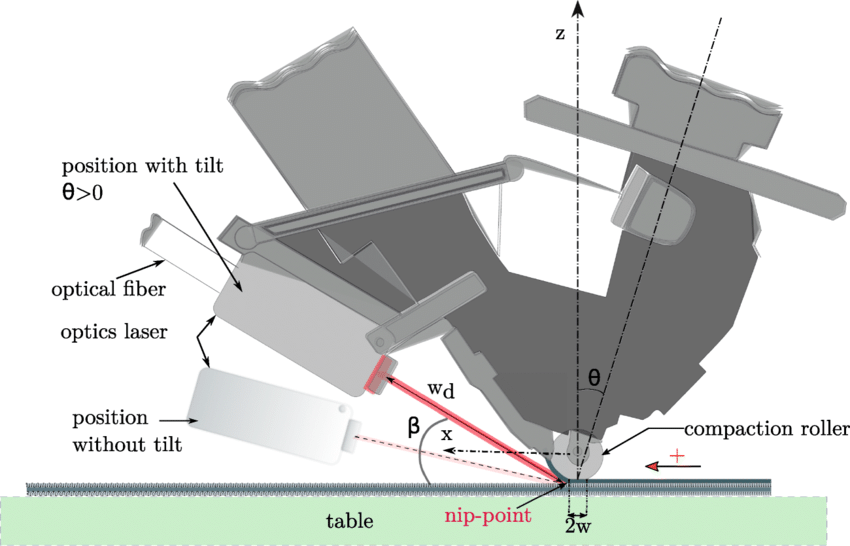
Equipment Modifications
When transitioning from prepreg to dry fiber processing, several key equipment modifications are necessary:
- Heating Systems: Upgrade to precision heating systems (often laser-based) with controlled emission areas and fast response times4
- Tension Control: Implement enhanced tow tension control to manage the lower stiffness of dry fibers46
- Head Controls: Modify AFP head controls for precise placement of the more flexible material4
- Safety Measures: Add appropriate safety features to accommodate the higher heating requirements4
Environmental Control Requirements
Successful dry fiber AFP implementation requires careful attention to environmental conditions:
Temperature Management:
- Maintain stable facility temperature (typically 20-25°C)
- Monitor temperature gradients
- Implement appropriate HVAC systems7
Humidity Control:
- Maintain recommended humidity range (typically 50-65% RH)
- Install humidity monitoring systems
- Implement dehumidification capabilities as needed7
Clean Room Practices:
- Establish contamination control protocols
- Implement appropriate air filtration
- Develop material handling procedures7
Process Optimization
For optimal dry fiber placement results:
- Fiber Placement Optimization: Design fiber placement patterns to achieve proper permeability in the preform for reliable infusion6
- First Layer Focus: Start with slower speeds, verify proper tack levels, and monitor temperature closely during initial layup7
- Continuous Monitoring: Track key parameters, review quality data, and document any deviations from standard process7
- Process Validation: Implement regular quality checks and parameter verification7
Applications in Aerospace and Beyond
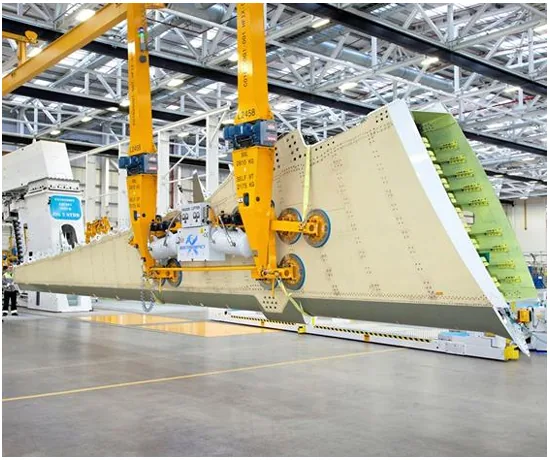
Dry fiber AFP technology has found particular success in aerospace applications, including:
- Production of resin-infused wings for commercial aircraft
- Manufacturing of complex, integrated structures like aircraft tailcones
- Creating large unitized structures that would be challenging with traditional prepreg6
The technology is also expanding into other industries where large-scale, high-performance composite structures are required.
Conclusion
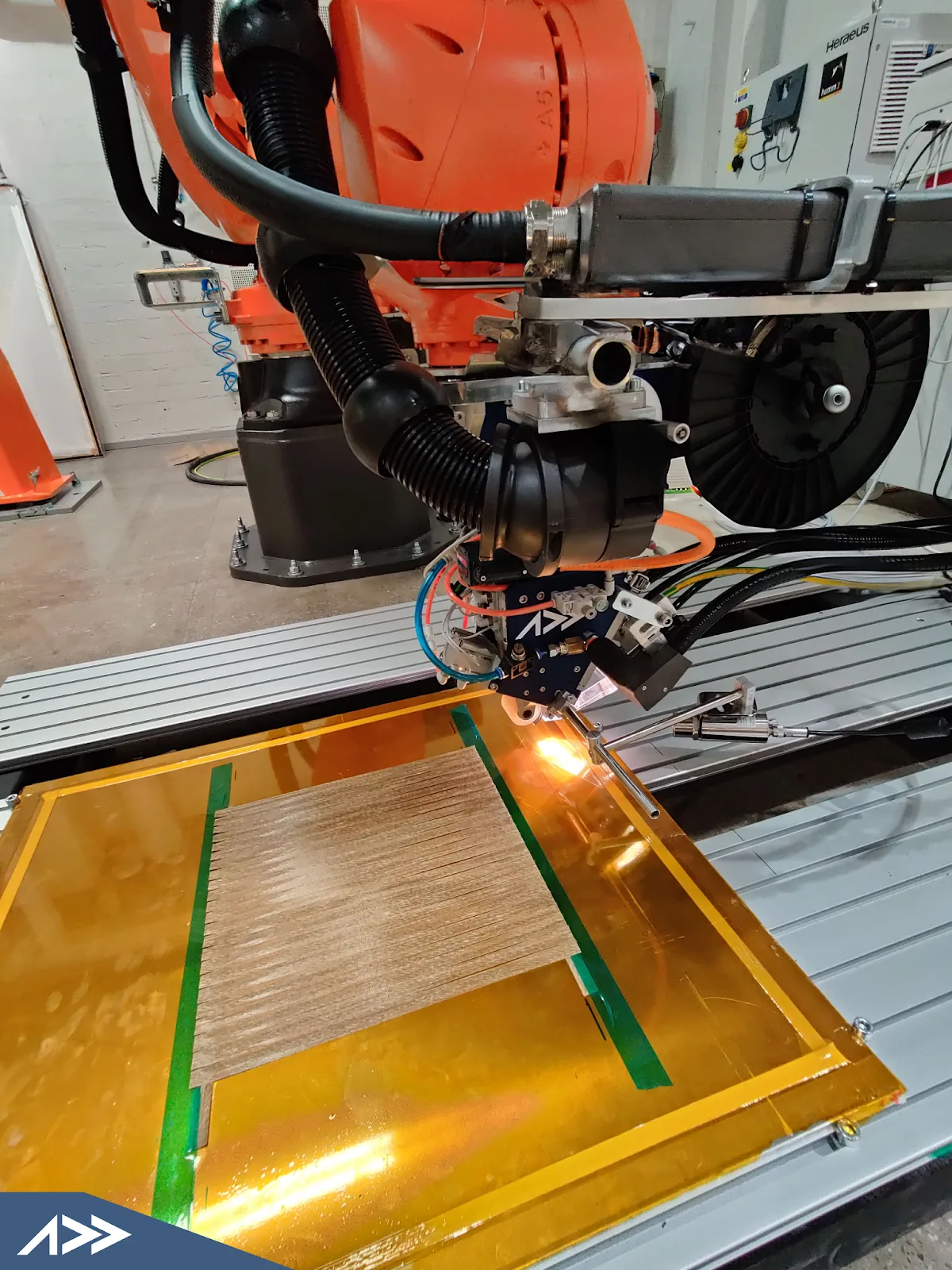
Dry fiber placement represents a significant advancement in AFP technology, offering cost savings, improved processing rates, and enhanced design possibilities. While implementing dry fiber AFP systems requires careful consideration of equipment modifications and process parameters, the benefits make it an increasingly attractive option for modern composite manufacturing.
As the technology continues to mature, we can expect to see wider adoption across aerospace and other industries seeking to leverage the advantages of composite materials while reducing production costs and improving manufacturing efficiency.
Citations:
- https://compositeskn.org/KPC/A303
- https://en.wikipedia.org/wiki/Automated_fiber_placement
- https://mtorres.es/en/composite-materials/dry-fiber
- https://www.electroimpact.com/WhitePapers/2020-01-0030.pdf
- https://www.drbeasleys.com/blog/2014/07/01/wet-vs-dry-carbon-fiber
- https://www.compositesworld.com/articles/dry-fiber-placement-surpassing-limits
- https://www.addcomposites.com/post/how-to-use-automated-fiber-placement-for-aerospace-industry-a-practical-guide
- https://www.addcomposites.com/post/what-is-automated-fibre-placement-afp
- https://scholarcommons.sc.edu/context/emec_facpub/article/1840/viewcontent/1_s2.0_S2666682021000773_main.pdf
- https://www.sae.org/publications/technical-papers/content/2020-01-0030/
- https://www.sciencedirect.com/science/article/pii/S2666682021000773
- https://www.sciencedirect.com/science/article/abs/pii/S2213846324000336
- https://www.addcomposites.com/post/afp-machines-and-components
- https://www.sciencedirect.com/science/article/pii/S1000936121001734
- https://ntrs.nasa.gov/api/citations/20200002536/downloads/20200002536.pdf
- https://www.mdpi.com/2673-4591/90/1/14
- https://www.nccuk.com/what-we-do/technologies/fibre-placement/
- https://www.trelleborg.com/fi-fi/seals/products-and-solutions/advanced-composites/automation-equipment/fiber-placement/thermoplastic-afp
- https://www.infona.pl/resource/bwmeta1.element.baztech-a5f6d38d-2516-4298-8081-039099f19a82/content/partDownload/a24e57ce-7241-3a53-a598-b2d6c3a8378e
- https://ntrs.nasa.gov/api/citations/20160009052/downloads/20160009052.pdf
- https://www.compositesworld.com/articles/atl-and-afp-defining-the-megatrends-in-composite-aerostructures
- https://fenix.tecnico.ulisboa.pt/downloadFile/1126295043839183/Thesis%20%20Joao%20Cravidao%2084277.pdf
- https://www.sciencedirect.com/science/article/pii/S1359836824006553
- https://www.compositesworld.com/articles/the-next-evolution-in-afp
- https://www.mdpi.com/2073-4360/13/21/3853
- https://publica.fraunhofer.de/bitstreams/7df0d7e7-9689-47ee-8938-5cbc008e73f2/download
- https://www.youtube.com/watch?v=vce8LzVB9AQ
- https://www.tandfonline.com/doi/full/10.1080/20550340.2018.1545377
- https://spectrum.library.concordia.ca/id/eprint/992193/1/Saboukhi_MASc_S2023.pdf
- https://www.addcomposites.com/post/overview-of-automated-fiber-placement-process
- https://www.addcomposites.com/post/the-insane-engineering-behind-automated-fiber-placement
- https://www.addcomposites.com/post/automated-fiber-placement-process-a-revolutionary-way-to-create-composite-parts
- https://www.addcomposites.com/post/the-automated-fiber-placement-process-design-cycle-benefits-and-applications
- https://www.addcomposites.com/post/filament-winding-is-dead-not-the-revolutionary-fusion-of-traditional-and-cutting-edge-composite-manufacturing
- https://spectrum.library.concordia.ca/983680/1/Gharabegi_MASc_S2018.pdf
- https://www.addcomposites.com/post/can-it-be-made-with-afp-a-comprehensive-guide-to-understanding-automated-fiber-placement
- https://core.ac.uk/download/pdf/211520449.pdf