

ADDCOMPOSITES BLOG
Composite Isogrid Structures: Advantages and Advanced Manufacturing Techniques
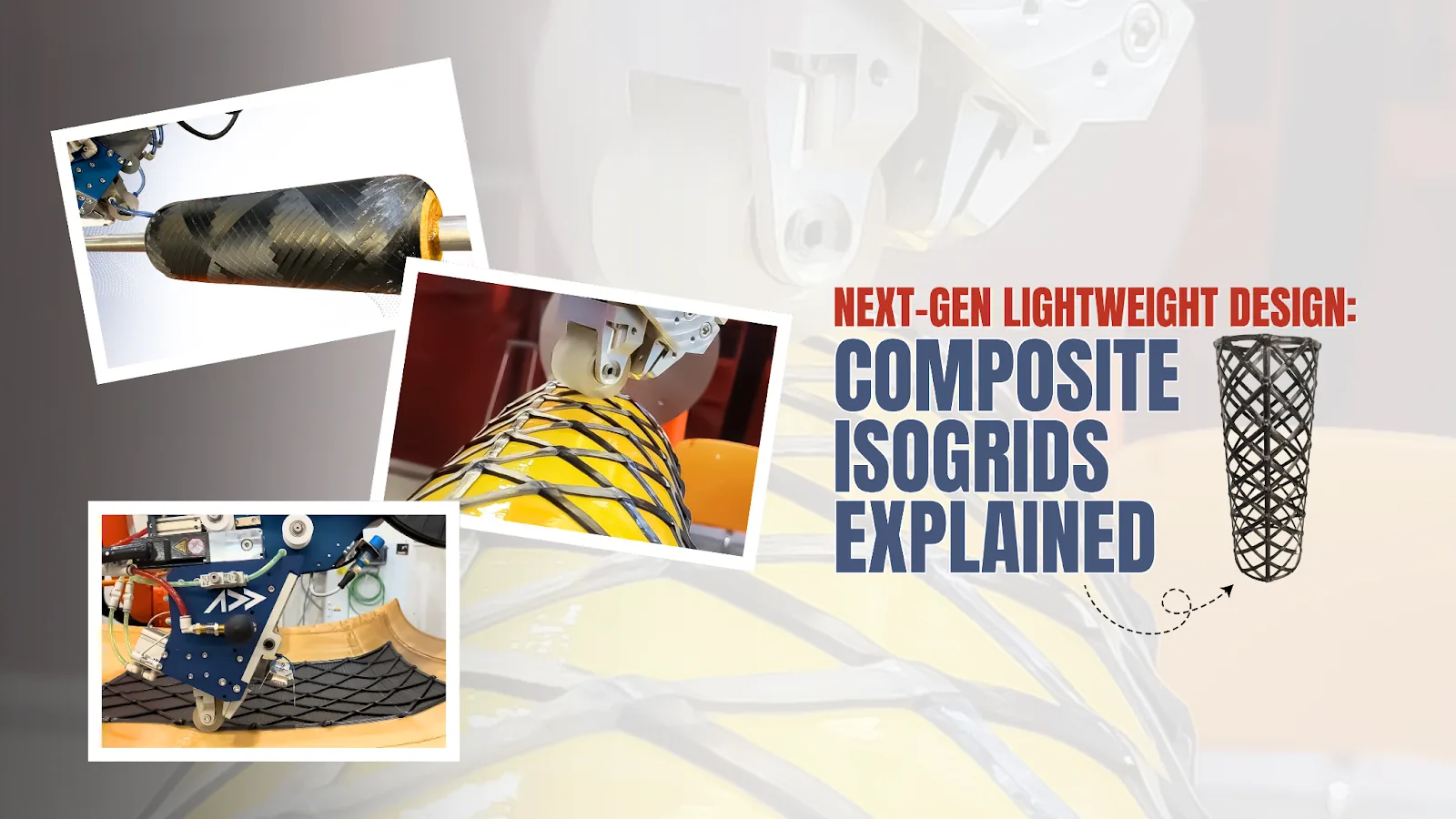
Composite isogrid structures have emerged as a transformative solution in aerospace, automotive, and advanced engineering applications due to their exceptional strength-to-weight ratios, damage tolerance, and structural efficiency. These lattice-like configurations, characterized by triangular rib patterns, outperform traditional sandwich structures and aluminum isogrids by combining lightweight design with isotropic mechanical behavior 1 6 13. Recent advancements in automated fiber placement (AFP), filament winding, and continuous fiber 3D printing have further enhanced their manufacturability, enabling cost-effective production of complex geometries. This report examines the rationale behind the preference for isogrid structures and explores the technical nuances of their fabrication using modern manufacturing technologies.
Advantages of Composite Isogrid Structures
Structural Efficiency and Load Distribution
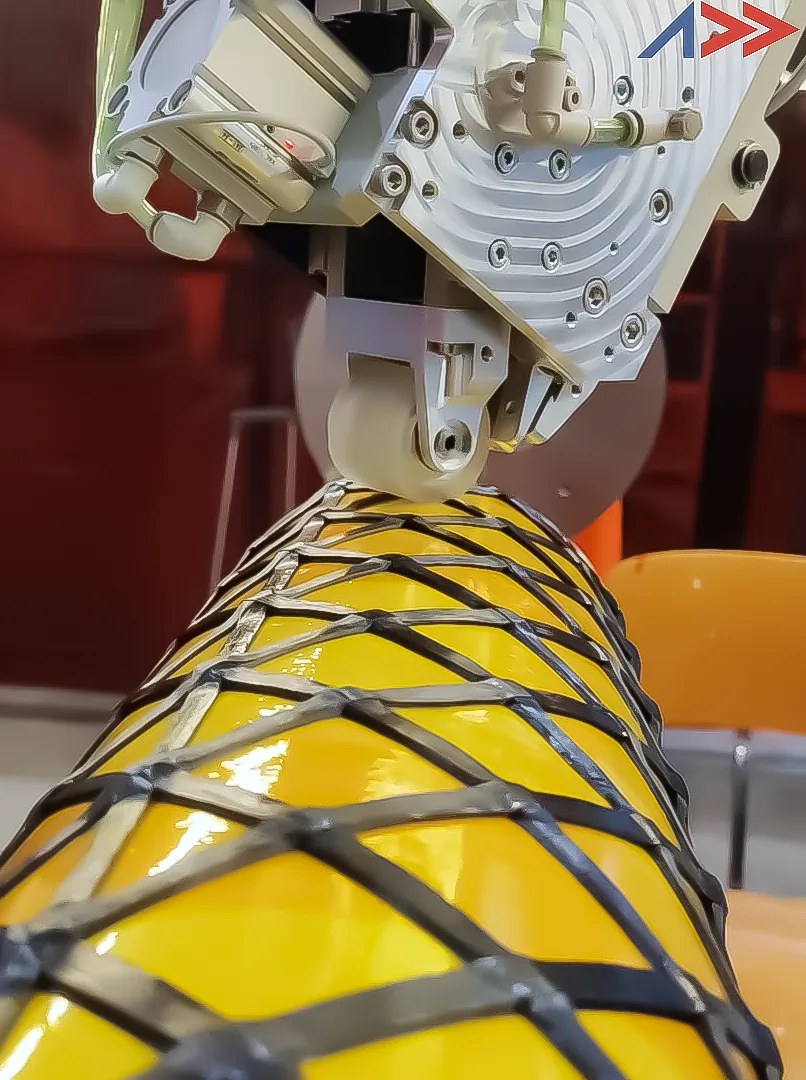
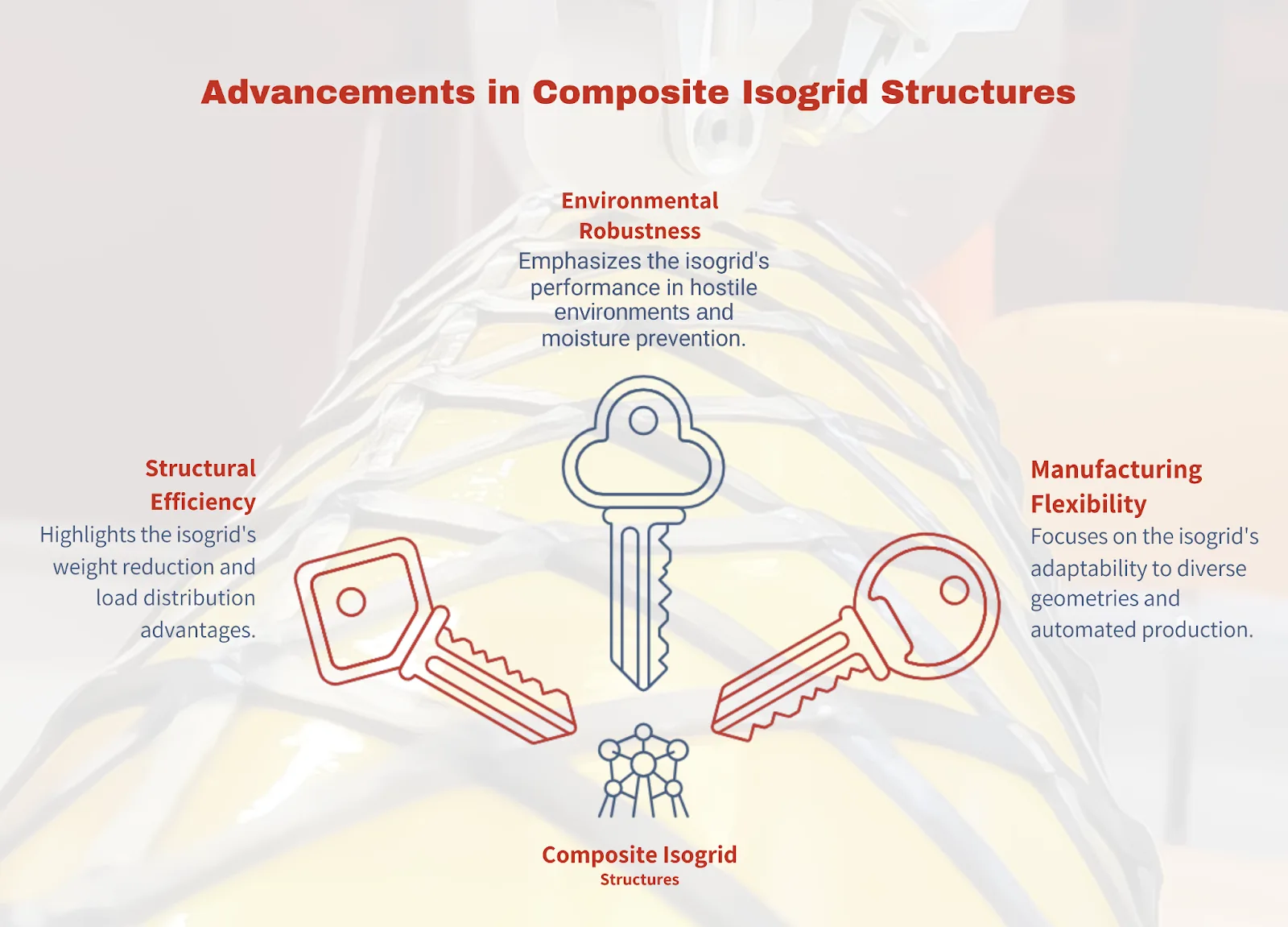
The triangular isogrid pattern mimics isotropic material behavior by evenly distributing mechanical loads across its lattice 1 3. Unlike conventional honeycomb cores, which rely on shear transfer through adhesive bonds, composite isogrid ribs integrally connect to the skin, eliminating delamination risks while maintaining stiffness. Studies demonstrate that isogrid panels achieve 20–30% weight reduction compared to aluminum counterparts while matching or exceeding their buckling resistance 6 8. The repetitive rib-skin architecture also provides redundancy, allowing localized damage (e.g., impact-induced rib fractures) to remain contained within individual cells without catastrophic failure 9 13.
Environmental Robustness
Composite isogrids exhibit superior performance in hostile environments. Open lattice structures prevent moisture retention—a critical flaw in honeycomb sandwiches where water ingress accelerates corrosion 9. Thermal stability is enhanced through tailored coefficient of thermal expansion (CTE) matching between ribs and skins. For instance, hybrid molds combining aluminum and Teflon optimize compaction during curing by exploiting differing CTEs, ensuring dimensional precision under thermal cycling 1.
Manufacturing Flexibility
Isogrids adapt to diverse geometries, from parabolic antenna reflectors to cylindrical rocket fuselages 4 12. Automated processes like AFP and filament winding enable rapid production of curved and flat panels with minimal manual intervention, reducing labor costs by up to 40% compared to hand-laid composites 6 12.
Manufacturing Methods for Composite Isogrid Structures
Automated Fiber Placement (AFP)
Process Overview
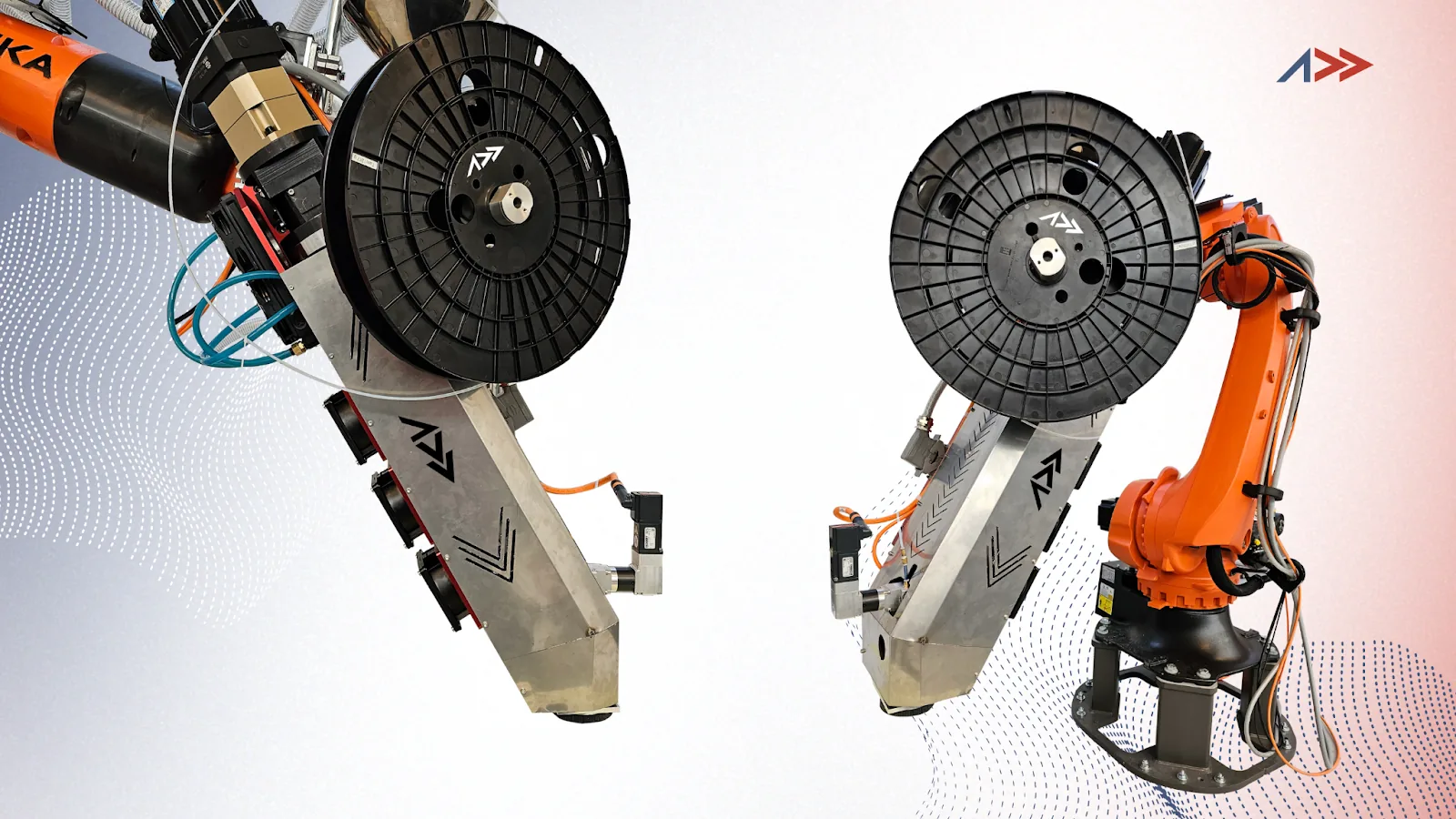
AFP employs robotic systems to lay continuous prepreg tows (typically 3.2–12.7 mm wide) into predefined helical or axial grooves. A multi-axis gantry guides the placement head, ensuring precise fiber orientation aligned with principal stress directions 6 12. Post-deposition, circumferential skin layers are wound over the ribs, and the assembly is vacuum-bagged and cured in autoclaves 8.
Technical Innovations
- Node Optimization: Traditional AFP struggles with fiber accumulation at rib intersections, leading to resin-rich zones and weak points. Modern systems address this through fiber steering, where tows are spatially redistributed using spreader mechanisms, reducing fiber volume fraction at nodes by 15–20% while maintaining strength 8 12.
- Tooling: Silicone rubber molds with negative isogrid patterns enable high-fidelity rib formation. The mold’s high CTE ensures uniform compaction during curing, as thermal expansion presses prepreg layers into groove walls 6 8.
Case Study: EADS CASA Espacio
EADS CASA Espacio demonstrated AFP’s scalability by fabricating 4-meter-diameter isogrid cylinders for satellite launch vehicles. Using Toray T800H/3900-2 carbon-epoxy prepreg, the process achieved a fiber volume fraction of 58% with ±1° angular accuracy. Post-cure ultrasonic testing revealed <0.5% void content, meeting aerospace-grade standards 8 12.
Filament Winding
Process Overview
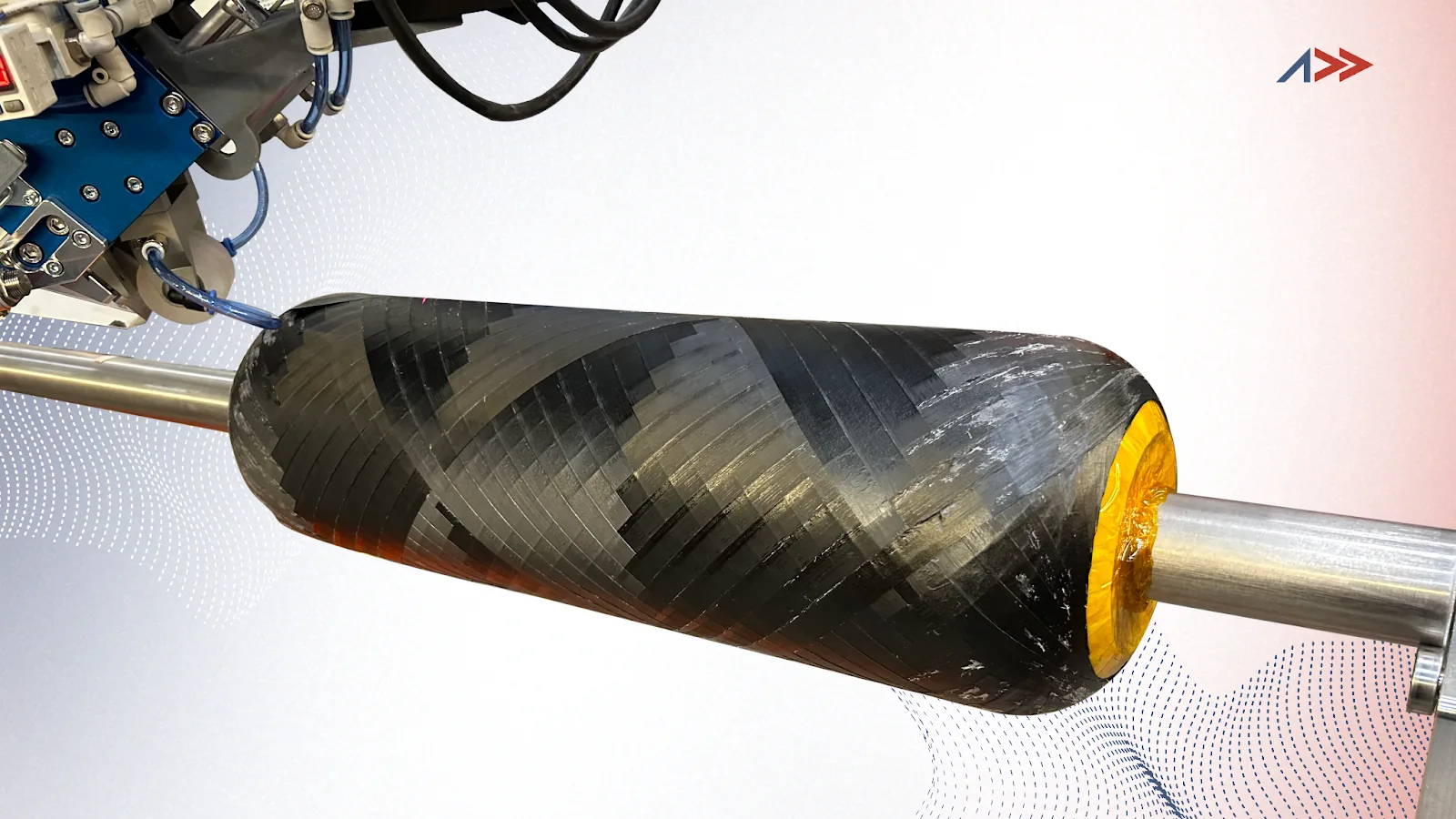
Filament winding constructs isogrids by depositing continuous fibers (wet or pre-impregnated) into machined mandrel grooves. After filling the grooves, a secondary skin layer is wound over the structure, and the entire assembly is co-cured 3 11.
Key Advancements
- Hybrid Mandrels: Teflon-lined aluminum mandrels combine rigidity for dimensional control with low-friction surfaces for easy demolding. Teflon’s CTE (100–150 μm/m·°C) exceeds aluminum’s (23 μm/m·°C), enhancing compaction during the 120–180°C cure cycle 1 3.
- Pseudo-Isotropic Joints: U.S. Patent 5,200,251 details a method for creating quasi-isotropic laminates at joints by winding fibers around radial pins. Post-cure trimming yields multidirectional fiber alignments, improving load transfer in cutout regions 3.
Performance Metrics
Wet filament-wound isogrids exhibit 10–15% higher interlaminar shear strength than AFP-manufactured counterparts due to optimized resin infusion. A study by CETMA and COMEC produced epoxy-based isogrid panels with 320 MPa compressive strength—comparable to aluminum 6061-T6—at 40% lower weight 1 11.
Continuous Fiber 3D Printing
Process Overview
Additive manufacturing systems like the Anisoprint Composer A3 co-extrude thermoplastics (e.g., PA6) and continuous carbon fiber tows pre-impregnated with thermoset binders. Layer-by-layer deposition builds isogrid lattices with programmable infill densities (10–80%) 2 10 15.
Technical Highlights
- Dual-Matrix Systems: Anisoprint’s CFC (Composite Fiber Coextrusion) technology simultaneously extrudes a thermoplastic matrix (250°C melt temperature) and epoxy-bonded carbon fibers. The thermoset binder stabilizes fibers during printing, while the thermoplastic ensures interlayer adhesion 2 10.
- Infill-Strength Correlation: Compression tests on 3D-printed isogrids revealed buckling loads scaling linearly with infill percentage. At 80% infill, panels sustained 12.4 kN loads—95% of AFP-manufactured equivalents—but at 30% lower material cost 2 10.
Roboze Carbon PA Case Study
Roboze’s FFF-based Carbon PA (20% short carbon fiber-reinforced polyamide) produced isogrid panels with specific buckling loads of 0.31 kN/g. Optimized parameters (240°C extrusion, 70°C bed temperature) minimized warping, achieving ±0.1 mm dimensional accuracy 5 15.
Comparative Analysis of Manufacturing Methods
| Parameter | AFP | Filament Winding | 3D Printing |
|---|---|---|---|
| Fiber Volume Fraction | 55–60% | 50–58% | 45–50% |
| Production Speed | 5–10 kg/hr | 3–8 kg/hr | 0.5–2 kg/hr |
| Minimum Rib Width | 3 mm | 5 mm | 2 mm |
| Scalability | High (large panels) | Moderate (cylinders) | Low (prototypes) |
| Relative Cost | $$$ | $$ | $ |
AFP dominates high-volume aerospace production due to superior mechanical properties, while 3D printing excels in rapid prototyping and custom geometries 2 6 12. Filament winding remains optimal for cylindrical components like rocket interstages 3 11.
Conclusion
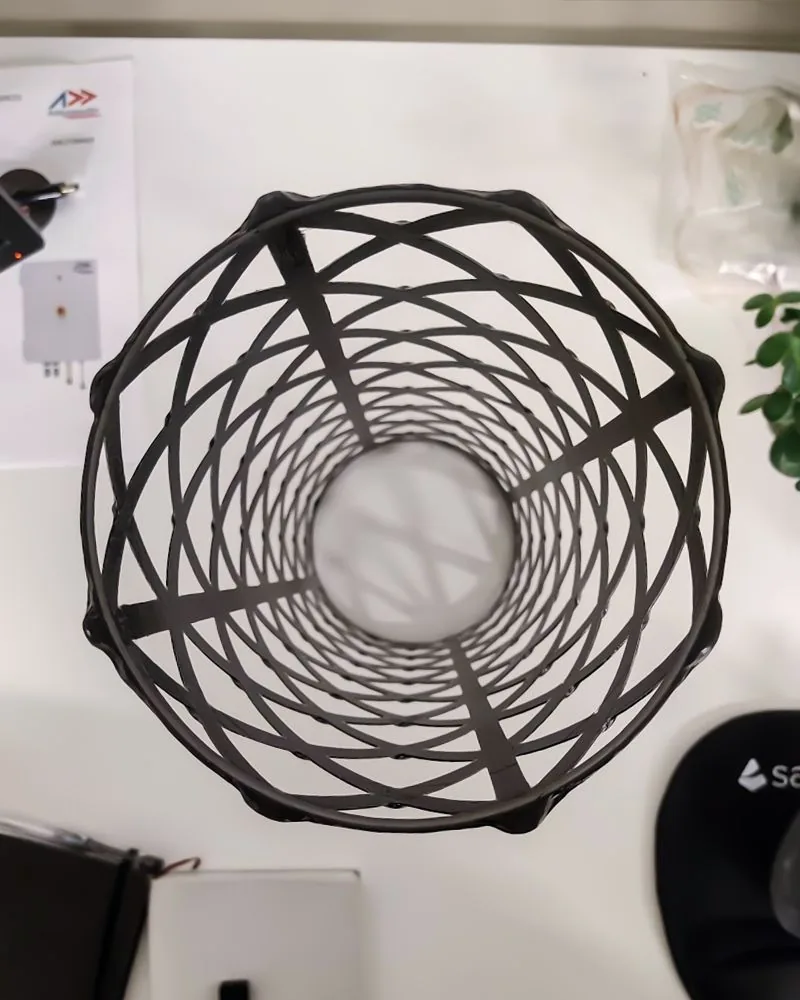
Composite isogrid structures represent a paradigm shift in lightweight design, offering unmatched strength-to-weight ratios and environmental resilience. AFP and filament winding provide industry-proven solutions for large-scale production, whereas continuous fiber 3D printing democratizes access to isogrid fabrication for SMEs and research institutions. Future advancements in hybrid manufacturing—combining AFP’s precision with additive manufacturing’s flexibility—promise to further reduce costs and expand applications into renewable energy and automotive sectors. As demonstrated by CETMA, COMEC, and Anisoprint, ongoing innovation in tooling and material systems will solidify isogrids as a cornerstone of next-generation composite engineering 1 2 15.
Citations
- [1] Composite Isogrid Structures using Innovative Deposition Technology
- [2] PMC Article on Composite Isogrids
- [3] US Patent 5,200,251
- [4] EP Patent on Composite Structures
- [5] 3D Printing Isogrid Structures with Carbon Fiber-Reinforced Polyamide
- [6] Metall Mater Eng Article
- [7] IJARET Article
- [8] Academia.edu – Structural Testing and Simulation
- [9] ICCM12 Proceedings Paper
- [10] PubMed Article
- [11] DHU Structures Article
- [12] NASA Technical Report
- [13] ATG Europe – Grid Stiffened Structures
- [14] NASA Technical Report
- [15] Roboze 3D Printing Solutions
- [16] NASA CR-124075 Isogrid Design
- [17] ResearchGate – Innovative Manufacturing
- [18] MDPI Article
- [19] ResearchGate – Design and Manufacturing of an Isogrid Structure
- [20] NASA TechPort Project
- [21] AIP/ACP Article
- [22] AIAA Conference Paper
- [23] IJSTE Article
- [24] F1Technical Forum Discussion
- [25] Patent Images – EP0948085A2
- [26] YouTube Video
- [27] AddComposites Blog Post
- [28] ResearchGate – Fabrication Head
- [29] YouTube Video
- [30] LinkedIn Post – Isogrid Structures
- [31] YouTube Playlist
- [32] ResearchGate – Manufacturing of Isogrid Structures by 3D Printing
- [33] CompositesWorld – Continuous Composites for NASA
- [34] YouTube Channel
- [35] LinkedIn Post – AFP Solutions
- [36] Altair Resource Library
- [37] ResearchGate – Robotic Filament Winding
- [38] Taylor & Francis Online Article
- [39] ResearchGate – Filament Winding of Composite Isogrid Structures
- [40] SciLit Publication
- [41] DTIC Document
- [42] Academia.edu – Innovative Manufacturing and Structural Analysis
- [43] Colab Article
- [44] Taylor & Francis Permissions
- [45] Sci-Hub Download
- [46] Semantic Scholar – Manufacture of High-Performance Isogrid Structures
- [47] OUCI Entry