

ADDCOMPOSITES BLOG
What is Automated Fiber Placement in the Age of AI?
What is Automated Fiber Placement in the Age of AI?
The technology that was once locked behind €1-5M price tags is now transforming how we think about composite manufacturing—and it's more accessible than ever.
If you've been following composite manufacturing for any length of time, you've probably noticed something: the industry is shifting. Fast. What used to require specialized facilities, massive capital investments, and teams of highly trained programmers is now becoming accessible to small and medium enterprises, research labs, and industries that never could have touched this technology before.
Automated fiber placement (AFP) isn't new—it's been around since the 1970s. But in 2026, we're seeing a convergence of AI, accessible robotics, and hybrid manufacturing that's fundamentally changing the game. Let me walk you through what's happening and why it matters.
The Basics: What AFP Actually Does
At its core, AFP is an additive manufacturing technique where robotic systems equipped with placement heads precisely lay down narrow strips of fiber-reinforced material—we call them tows, typically 3.2–25.4 mm wide—onto a mold surface to build laminates layer by layer.
This method supports thermoset prepregs, thermoplastic prepregs, and dry fibers for subsequent resin infusion. The key advantage? You can create complex geometries that traditional hand layup or automated tape laying simply cannot achieve efficiently.
Feeding continuous tows from spools with controlled tension
Steering fibers along curved paths for variable orientations
Applying heat via laser, infrared, or hot gas to soften material
Compacting with rollers to ensure adhesion and minimize defects
The practical takeaway: If you're building something that needs to be lightweight, strong, and complex in shape, AFP gives you options that other processes don't.
Why 2026 is Different
Here's where things get interesting. What once required multi-million dollar capital investments and specialized facilities is now available through modular, AI-enhanced systems that can be integrated into standard industrial robots.
We're talking about systems like the AFP-XS that can be mounted on standard 6-axis robots—dramatically reducing both capital costs and maintenance complexity compared to specialized gantry systems. The entry point has dropped from millions to monthly costs comparable to a skilled operator's salary.
This democratization, combined with intelligent software that automates path planning and real-time defect correction, is expanding AFP beyond aerospace into automotive, wind energy, medical devices, and consumer products.
Cost of Entry Comparison (Logarithmic Scale)
The Intelligence Layer: AI Changes Everything
Let me be direct about this: the AI integration isn't just marketing speak. It's fundamentally changing how we approach AFP.
What AI Actually Does in Modern AFP
Modern AI-powered systems leverage physics-based models combined with machine learning trained on thousands of actual layups to predict process outcomes with remarkable accuracy.
Path Planning
Modern AI-powered path planning algorithms automatically generate collision-free trajectories while optimizing for multiple objectives simultaneously—minimizing layup time, reducing material waste, maximizing structural performance, and ensuring manufacturability.
Software platforms like AddPath leverage physics-based models combined with machine learning trained on thousands of actual layups to predict process outcomes with remarkable accuracy. You can iterate virtually before committing materials to production.
Convolutional neural networks analyze sensor data in real-time, identifying subtle defect signatures that would escape human detection. The system can trigger automatic corrective actions without interrupting production flow.
Machine learning systems continuously improve process efficiency by analyzing production data to identify optimization opportunities invisible to human operators. Predictive maintenance reduces unplanned downtime.
The practical reality: Engineers without specialized composite programming knowledge can now generate optimized toolpaths automatically. The expertise barrier has dropped significantly.
How It Actually Works: The Core Steps
Let me break down the AFP process into practical terms:
Preparation
This is where everything starts. You import geometry into CAD/CAM software, define ply boundaries, and generate optimized tool paths. Modern systems account for tool contours, collision avoidance, and layup sequences. Tools are fabricated—often via additive manufacturing using materials like Ultem polyetherimide with internal supports to handle compaction stresses up to 344 kPa.
Fiber Feeding and Cutting
Tows unroll from multiple spools (up to 16–24 per head) in a controlled creel system. Tension control via differential payout prevents slippage, while cutting mechanisms enable precise adds, drops, and restarts for curvilinear paths. Modern systems incorporate real-time tension monitoring with AI-based adaptive control.
Deposition
The placement head traverses the mold at speeds of 0.4–50.8 m/min (typically 1–10 m/min for precision), laying tows in programmed orientations while applying localized heat and compaction. For thermoset prepregs: 70–80°C heating. For thermoplastics: 300–400°C via laser or hot gas for in-situ consolidation.
Quality Checks
In-process monitoring detects defects like gaps, overlaps, or wrinkles using vision systems—thermal cameras or laser profilometers integrated into the head. These detect anomalies by analyzing temperature profiles or surface topography, enabling real-time adjustments with typical tolerances of 0.5 mm.
Post-Layup Processing
Optional consolidation under vacuum bagging to remove air pockets, followed by curing tailored to the matrix. For thermoplastics, in-situ methods can eliminate autoclave processing entirely.
The Equipment: What You're Actually Working With
The Deposition Head
This is the heart of any AFP system. It handles feeding, cutting, heating, and compacting fiber tows. Modern heads accommodate 8 to 32 tows simultaneously, enabling deposition widths from narrow slits (3.125 mm) to wider bands.
Key Sub-elements
Manages tow feeding with controlled tension
Provides individual cut-restart functionality for each tow
Applies downward pressure post-heating (durometer 35–85)
Hot gas torches, infrared lamps, or lasers depending on material
Motion Systems
Gantry vs. Robotic Systems
Gantry-based Systems
- Fixed overhead rail structures with 6-7 axes
- High precision over large work envelopes
- Great for flat or gently curved components
- Tolerances down to 0.1 mm
- Requires significant floor space and capital
Robotic Systems
- Industrial articulated arms, 6- or 7-axis
- Mounted on portable bases for flexibility
- Better for curved or closed surfaces
- More accessible capital investment
- Some precision sacrifice for very large parts
| Parameter | Gantry Systems | Robotic Systems |
|---|---|---|
| Precision | ±0.1 mm | ±0.25 mm |
| Work Envelope | Up to 20m+ | 2-4m reach |
| Capital Cost | €1-5M | €150-400K |
| Floor Space | Large dedicated | Compact/portable |
| Flexibility | Limited | High |
| Best For | Large flat panels | Complex 3D shapes |
System Capability Profile
The Hybrid Manufacturing Revolution
Here's something that doesn't get talked about enough: the real power in 2026 isn't AFP alone—it's AFP combined with complementary processes.
AFP + Continuous Fiber Extrusion
Modern hybrid systems intelligently partition each part into regions optimized for different processes. AI-driven process planning automatically determines optimal process allocation based on geometric and structural requirements.
Process Allocation
- AFP for areas requiring precise fiber steering, thin walls, or variable stiffness
- Continuous fiber extrusion (like ADDX) for bulk material deposition, core structures, or secondary reinforcement
This hybrid approach combines the precision and material efficiency of AFP with the higher deposition rates and geometric flexibility of extrusion—enabling part designs and production economics that neither process could achieve independently.
Hybrid Part Composition Strategy
The practical advantage: You're not locked into one approach. You select the optimal process for each region of a part—using narrow-tow AFP for precision-critical areas and higher-deposition-rate extrusion for bulk material placement.
Materials: What You Can Actually Process
Fiber Types
AFP primarily employs:
Dominant due to exceptional tensile modulus (200-600 GPa). Tows from 3K to 50K filaments.
Cost-effective with modulus around 70-80 GPa
Impact resistance with modulus of 70-130 GPa
Bio-based composites and recycled carbon fibers
| Property | Carbon Fiber | Glass Fiber | Aramid Fiber |
|---|---|---|---|
| Tensile Modulus | 200-600 GPa | 70-80 GPa | 70-130 GPa |
| Density | 1.75-1.95 g/cm³ | 2.5-2.6 g/cm³ | 1.4-1.45 g/cm³ |
| Relative Cost | $$$ | $ | $$ |
| Primary Use | Aerospace, high-performance | Cost-sensitive, marine | Impact, ballistic |
Matrix Materials
Thermosets (epoxy, BMI)
- High strength-to-weight ratios
- Thermal stability up to 200°C
- Require curing cycles
- Traditional aerospace standard
Thermoplastics (PEEK, PPS)
- Recyclable and tough
- In-situ fusion during placement
- No separate curing required
- Out-of-autoclave processing
In 2026, the material palette has expanded significantly beyond traditional aerospace-grade carbon prepregs. Systems now routinely process recycled carbon fibers, bio-based composites, and hybrid fiber architectures.
Real Applications: Where AFP Actually Gets Used

Aerospace (The Original Home)
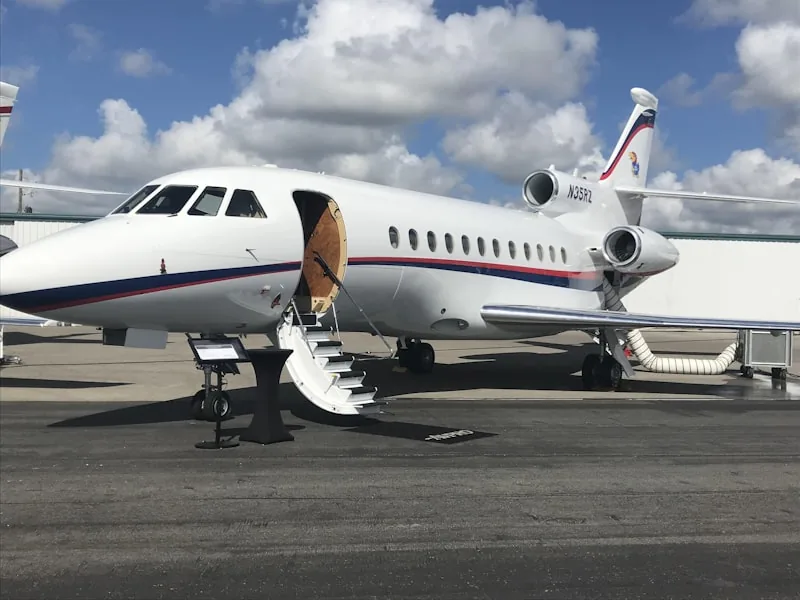
AFP has become integral to aerospace manufacturing—fuselage barrels, wing skins, stiffened panels. The Boeing 787 Dreamliner uses AFP for composite fuselage sections (50% composite airframe by weight). The Airbus A350 XWB uses AFP systems to produce 92% of its fuselage panels.
Results: Reduced part count through one-piece designs, weight savings up to 20% compared to aluminum structures.
Spotlight: Wind Energy
Transforming Blade Manufacturing
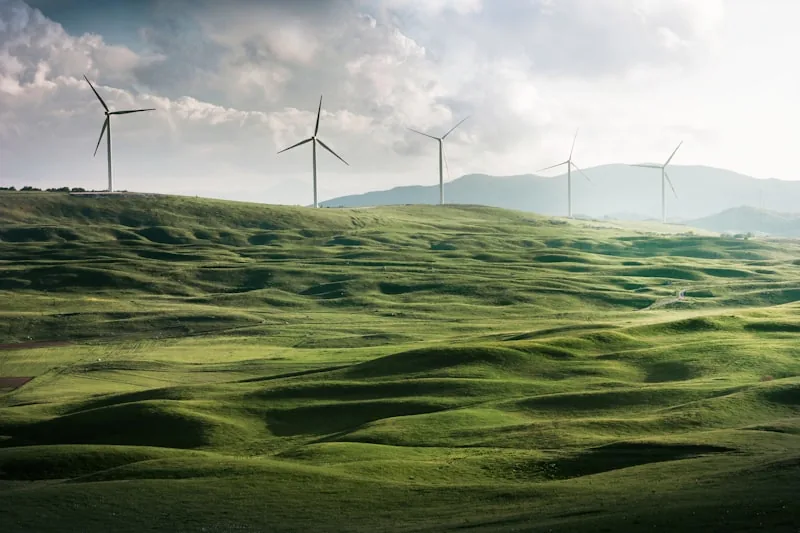
For turbine blades exceeding 100 meters, AFP reduces labor requirements from 5-10 workers per shift to 1-2 operators—an 80% decrease in overhead. Material waste drops under 6%.
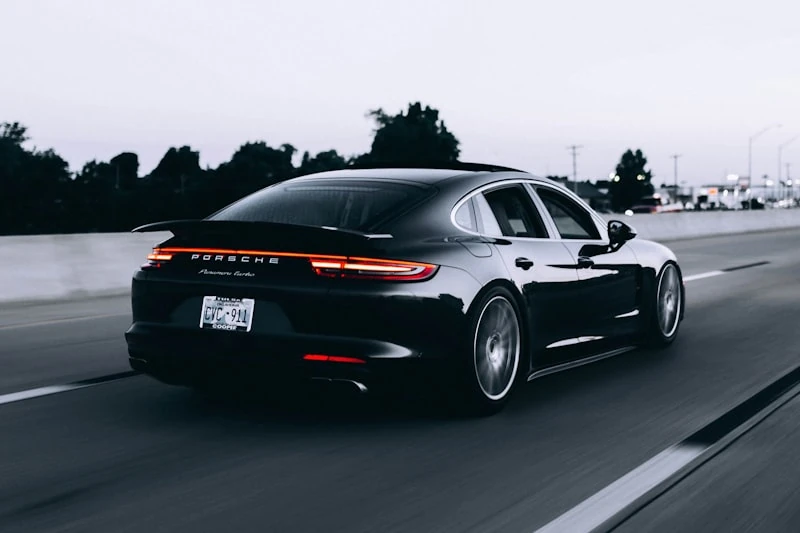
Lightweight composite components for chassis and body panels with tailored fiber orientations in high-stress areas. AFP's precision supports shapes that optimize energy dissipation during collisions.
CFRP hulls benefit from AFP-compatible processes that align fibers to improve hydrodynamics and load distribution. The Candela P-12 electric ferry achieves 45-50% weight savings over glass fiber equivalents.
Desktop-scale AFP machines automate layup of thermoplastic carbon fiber tow for custom prosthetic sockets—producing lightweight components in 45 minutes to 4 hours.
This is where democratization really shows. Small-scale AFP enables custom sports equipment, high-performance bicycles, and specialized protective gear.
2026 Market Distribution
The Economics: Let's Talk Numbers
Here's where we get practical.
Investment Comparison
Traditional AFP Investment
- Capital cost: €1-5M for gantry systems
- Specialized facilities required
- Dedicated programming expertise needed
- Only justified at high production volumes
Modern Modular AFP
- Entry point: Starting around €3,500/month rental
- Mounts on standard industrial robots
- AI-assisted path planning reduces expertise needs
- Economically viable at lower production volumes
Cost Savings Achieved
The practical math: Monthly rental costs comparable to a skilled operator's salary mean even single-digit annual production volumes can justify automation—particularly when you factor in quality consistency, reduced material waste, and the ability to produce complex geometries.
ROI Economics: Cost Per Part Analysis
Challenges and How They're Being Addressed
I want to be realistic here. AFP isn't magic, and there are genuine challenges.
Complex Geometries
Fabricating parts with highly concave or doubly curved surfaces where steering around tight radii (below 0.5 m) leads to gaps between adjacent tows.
Solution: AI-driven path planning systems tackle this through sophisticated geometric analysis that automatically identifies problematic regions and applies multiple strategies—varying tow width, adjusting steering angles, introducing strategic tow drops and adds.
For thick laminates, uneven heating during in-situ consolidation generates residual stresses that can cause warping. Solution: AI-controlled thermal systems with real-time thermal imaging maintain optimal temperature profiles.
AFP processes traditionally demanded significant expertise for path optimization. Solution: Software like AddPath with AI systems that automatically generate optimized paths from CAD geometry with minimal user input.
| Challenge | Traditional Approach | AI-Enabled Solution | Improvement |
|---|---|---|---|
| Complex Geometry | Manual path iteration | Automated optimization | 10x faster programming |
| Thermal Control | Fixed parameters | Real-time adaptive | 60% fewer defects |
| Programming | Expert required (weeks) | Automated (hours) | 95% time reduction |
The Future: What's Coming
AI Integration (Beyond Current Capabilities)
Generative AI systems are beginning to participate actively in the design process itself—suggesting fiber architectures optimized for specific loading conditions, automatically generating manufacturable designs that balance structural performance with production efficiency.
Getting Started: Practical Steps
If you're considering AFP for your operations, here's a realistic path:
Evaluate Your Parts
Not everything needs AFP. Look for: complex geometries that are difficult to hand lay, parts requiring consistent quality at moderate volumes, designs that benefit from variable fiber orientations, and applications where weight savings justify composite materials.
Consider Your Infrastructure
Do you already have industrial robots? Modular AFP heads can transform existing equipment. If not, factor complete cell setup into your planning.
Start with Software
Before committing to hardware, explore path planning software. Understanding what's possible with automated path generation helps you evaluate which parts are good candidates. AddPath offers cloud-based access to path planning tools.
Pilot Before Scaling
The rental model for systems like AFP-XS allows you to prove the technology with pilot projects and scale incrementally as business justifies—rather than requiring large upfront capital commitments.
The Bottom Line
AFP in 2026 isn't the same technology it was even five years ago. The convergence of affordable modular hardware, AI-driven software, and hybrid manufacturing strategies has democratized what was once possible only for the largest aerospace manufacturers.
Small and medium enterprises, research institutions, and emerging industries can now leverage the precision, efficiency, and design freedom that AFP provides. The age of AI in automated fiber placement isn't about replacing human expertise—it's about amplifying it.
For those willing to embrace these technologies, the opportunity is unprecedented: to participate in the transformation of composite manufacturing from an artisanal craft practiced by specialists into an accessible, scalable, sustainable industrial process.
Learn More
Have questions about implementing AFP in your operations? Contact us for a consultation.